
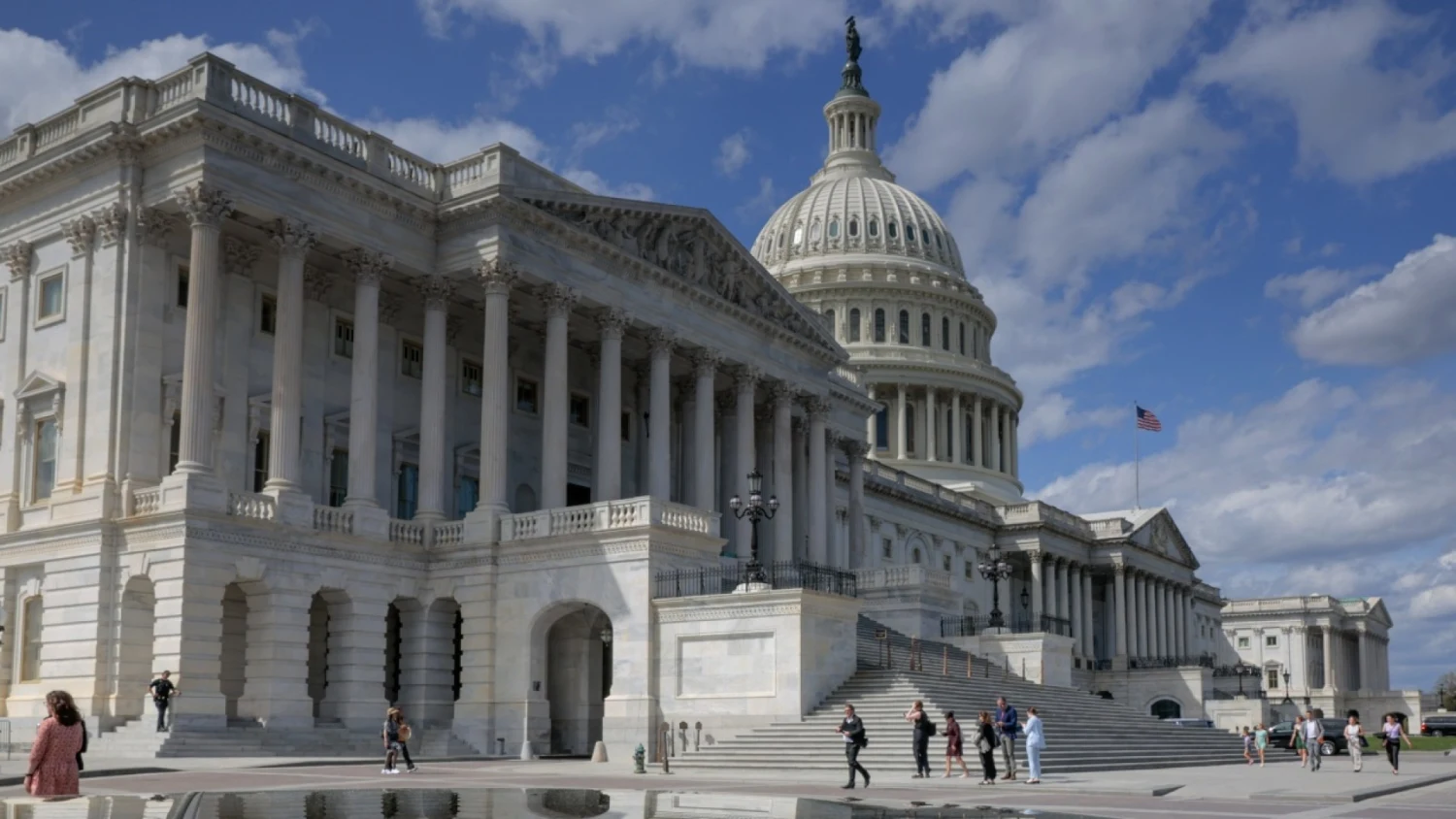
The fallout from President Donald Trump’s aggressive new tariffs has spurred Congress into action, with a growing number of Republicans joining Democrats to express interest in using their power to restrain him.
After the GOP-led Senate delivered a rare rebuke to Trump on Wednesday by voting to undo his tariffs on Canada, lawmakers in both chambers are weighing additional steps to rein him in. Senators are eyeing other mechanisms to rescind Trump’s existing tariffs while limiting his ability to impose new ones. And Democrats in the House are exploring ways to force a vote to revoke Canadian tariffs, putting out feelers to attract support from Republicans.
These efforts have a high bar for success as any resolution to undo Trump’s tariffs, or new law affecting his powers, would have to get around a presidential veto. But the level of support in Congress could affect the president’s political calculus around using taxes on imports to the U.S. as a centerpiece of his agenda.
Sen. Chuck Grassley, R-Iowa, a Trump ally who is third in line to the presidency, introduced a bill with Sen. Maria Cantwell, D-Wash., on Thursday that would reassert Congress’ authority and slap restrictions on the president’s power to levy tariffs.
The legislation, called the Trade Review Act of 2025, would require the president to notify Congress of new tariffs within 48 hours of imposition, while providing his reasons and an analysis of the impacts on American consumers and businesses. Then Congress would have 60 days to approve it. If it does not, the tariffs would expire after that period.
“For too long, Congress has delegated its clear authority to regulate interstate and foreign commerce to the executive branch,” Grassley said in a statement. “Building on my previous efforts as Finance Committee Chairman, I’m joining Senator Cantwell to introduce the bipartisan Trade Review Act of 2025 to reassert Congress’ constitutional role and ensure Congress has a voice in trade policy.”
Sen. Thom Tillis, R-N.C., praised Grassley for the bill because “he does believe that we’re a co-equal branch.” He said he’d vote for it, though it’s unclear if the bill will be brought to the Senate floor.
“I like congressional review. … In trade, it’s a good example,” Tillis said. “I’ll support Grassley if it gets a vote.”
The Cantwell-Grassley bill came one day after the Senate voted 51-48 to revoke Trump’s tariffs on Canadian products. Joining all 47 Democrats to pass it were GOP Sens. Susan Collins of Maine; Lisa Murkowski of Alaska; and Rand Paul and Mitch McConnell of Kentucky.
Sen. Tim Kaine, D-Va., the author of the resolution, said he’s looking to build on that success with more resolutions to block Trump’s tariffs, while examining his options in terms of what can move fastest.
He said “many more” than four Republicans were interested in his resolution than ultimately voted for it, predicting that more will come aboard “as the economic reality sets in.”
“There is going to be massive economic heartbreak in this country” if Congress fails to undo to the tariffs, Kaine warned. “Donald Trump started in office with the strongest economy in the world. … He has, in two months, with the chainsaw and the tariffs turned it into one with flashing red lights and question marks. We’ve got to use the tools at our disposal to get him to do a U-turn.”
For now, partisanship has made some Republicans leery of joining Democrats in a move their base could perceive as defying Trump.
“You have to do it in a neutral environment, where you have Republicans and Democrats not being forced to choose against their own party’s president in office when there is a tariff in question,” said Sen. Mike Rounds, R-S.D., who voted against Kaine’s measure and questioned whether the environment is right for Grassley’s bill.
Across the Capitol, senior House Democrats said they were looking to pass a resolution halting Canadian tariffs, similar to what the Senate voted on this week. Since Speaker Mike Johnson, R-La., is reluctant to show any daylight with Trump, Democrats are exploring an end-run around House GOP leaders.
Rep. Gregory Meeks, D-N.Y., the top Democrat on the House Foreign Affairs Committee, announced Thursday he planned to file what’s known as a discharge petition, a legislative tool that would allow supporters to bypass GOP leaders and force a vote on legislation if they can secure 218 signatures.
“Our neighbor to the north is one of our closest allies and trading partners, yet Trump has unilaterally launched a trade war that hurts American families, manufacturers, automakers, farmers, and small businesses,” Meeks said in a statement. “These tariffs are, causing needless suffering on both sides of our long-peaceful border and must be repealed.”
A discharge petition cannot be used on the Senate’s measure, so the House would have to write its own bill — perhaps an identical one.
Rep. Marcy Kaptur, D-Ohio, said in an interview that she would vote for a resolution “so we can replicate what the Senate did.”
Rep. Josh Gottheimer, D-N.J., a former co-chair of the bipartisan Problem Solvers Caucus who is running for governor and has relationships with many Republicans, said that he is collaborating with Meeks on the discharge effort.
“People are struggling with high costs right now and we need to do everything we can to make their lives more affordable,” Gottheimer said in a phone interview Thursday. “Whacking them with tariffs on their cheese, their milk, fixing their homes, and their cars is adding insult to injury — especially with one of our largest trading partners.”
And some Republicans who are experiencing heartburn over the Trump tariffs are signaling they could cross the aisle and sign the Democrats’ discharge petition. With the GOP’s thin 220-213 majority, supporters would need at least five Republicans to break with Trump and sign the discharge petition.
“I’d likely vote yes,” said moderate Rep. Don Bacon, R-Neb., who added that Democrats have “reached out” to him about the issue. “Discharges are the last resort. I prefer debating this in our conference and chamber first.”
“Bottom line,” Bacon continued, “I do think Congress should take back its tariff authorities and I think tariffs on Canada are inappropriate. They are abiding” by the United States-Mexico-Canada trade agreement signed into law by Trump.


