
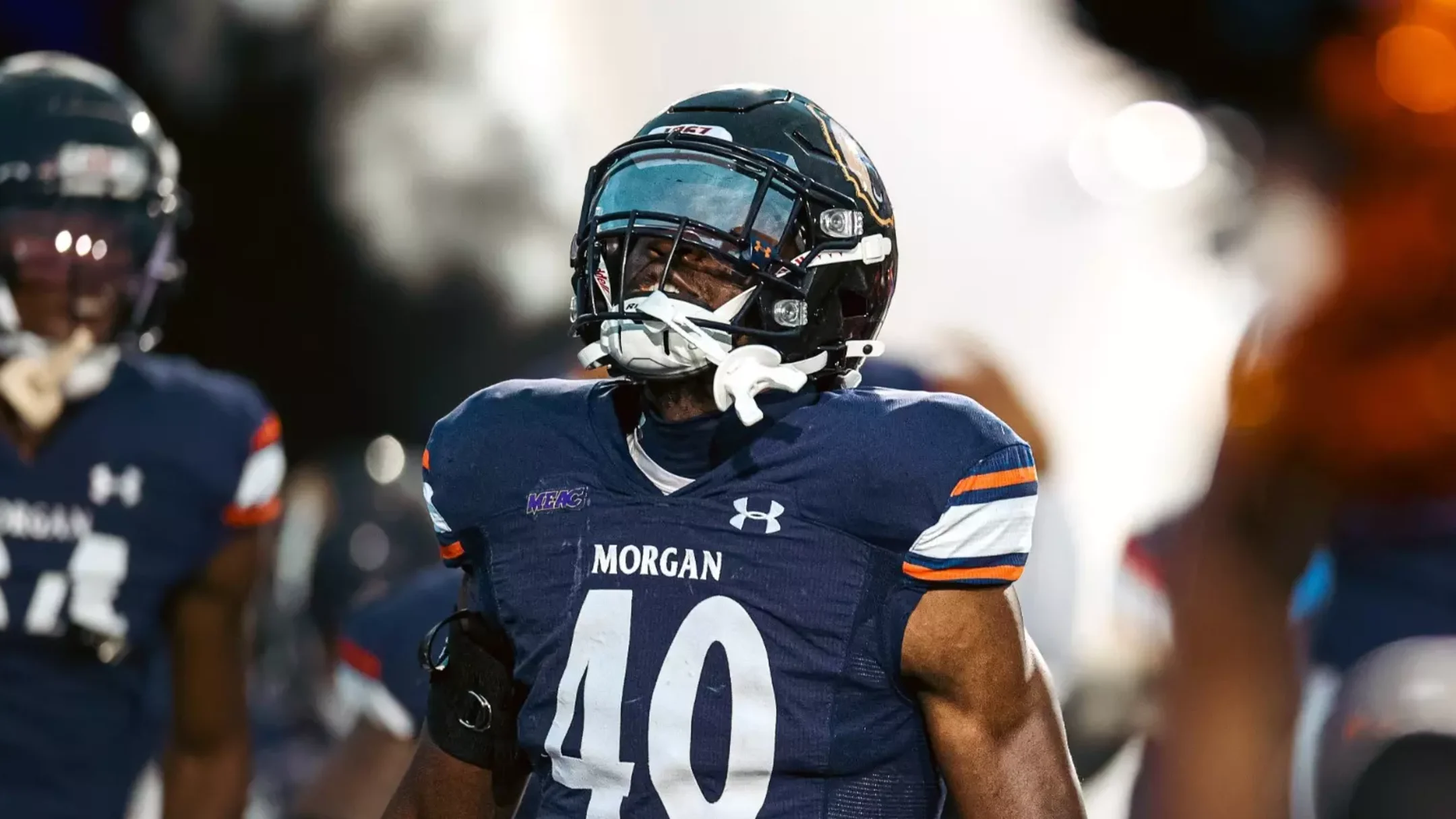
The are nearly 50 HBCUs fielding intercollegiate football programs at all competition levels—including NCAA Divisions I and II, the NAIA, and key independent conferences. This weekend in Ashburn, VA, the NFL hosted the HBCU Showcase, where 48 HBCU and 11 International Player Pathway Pro Day prospects participated in rigorous drills, meetings, and interviews at the Training Center at Commanders Park.
Daniel Van Norton, NFL Director of Football Development, declared the showcase was about “combining the Pro Days for often overlooked players” and was designed to “create more value for these athletes.”
In recent draft cycles, highly talented HBCU players have often been overlooked. For example, Alabama A&M left tackle Carson Vinson was selected as the 141st overall pick in the 5th round of the 2025 NFL Draft.
Out of 1,035 overall draft picks from 2022 to 2025, the six HBCU players drafted — Joshua Williams, Cobie Durant, James Houston IV, Ja’Tyre Carter, Isaiah Bolden, and Carson Vinson — represent just 0.58% of the draftees in that time period.
Building on this, former Jackson State and Colorado players, cornerback Travis Hunter (2nd overall pick) and quarterback Shedeur Sanders (144th overall, Round 5), were two notable HBCU alumni selected by NFL teams in 2025.
Yet, it is important to also recognize the contributions of running back Jacory Croskey-Merritt with the Commanders. Notably, all of these players who left HBCU programs to join Power 4 schools were considered as draft prospects.
This highlights that, even after Hunter won the 2024 Heisman Trophy, draft analysts primarily viewed him as a Colorado product rather than a Jackson State one. Nevertheless, both Hunter and Sanders remain strong advocates for the foundational training they received at Jackson State under Coach Deion Sanders.
The evolution of the HBCU Combine further shows the shifting landscape. The event, which began in Birmingham in 2023, moved to open HBCU Legacy Bowl Week in New Orleans and has now relocated to Virginia, largely for logistical reasons: Mardi Gras limited accommodation and travel for scouts and officials, whereas the District of Columbia area offers three airports and ample hotels. According to Van Norton, Commanders Park is a “great place” for the HBCU Showcase.
A primary reason players are recognized by team officials is through the workouts and meetings. The direct player-to-scout interaction is invaluable. Instead of using local Pro Days as a vehicle to gather young athletes that scouts consider “draft worthy,” the challenge for HBCU players has been finding a way to do so. In this case, the HBCU Showcase resolves some of those issues.
Still, the NFL must find a way to be more inclusive, because there are several players who fall outside the NFL’s scouts’ checkboxes but can play football at a high level.
Media coverage also plays a critical role in this process. Chatter about players—through articles, video highlights, and interviews—serves as an important medium for HBCU athletes navigating the draft. This raises the question of who is being discussed among HBCU football standouts like Erick Hunter, JaCobian Morgan, and Jacorian Sewell, and what is being said about them.
Andscape’s Mia Berry considers Erick Hunter as the “Most likely to be drafted, best defensive prospect, and best all-around performance” at the HBCU Showcase. NCCU running back Chris Mosley has the “best interview” while Alcorn State rusher, Jacorian Sewell, had the best offensive performance. FAMU’s offensive lineman, Ashton Gable, left the event as a “fan favorite.”
I constructed a heatmap using AI to showcase the following insights: The analysis revealed that media coverage of HBCU draft prospects is highly concentrated among a small group of star athletes. Several talented prospects from smaller HBCUs are receiving minimal national attention despite strong performances. This data underscores the need for a broader media focus to help level the playing field for underrepresented HBCU athletes.