
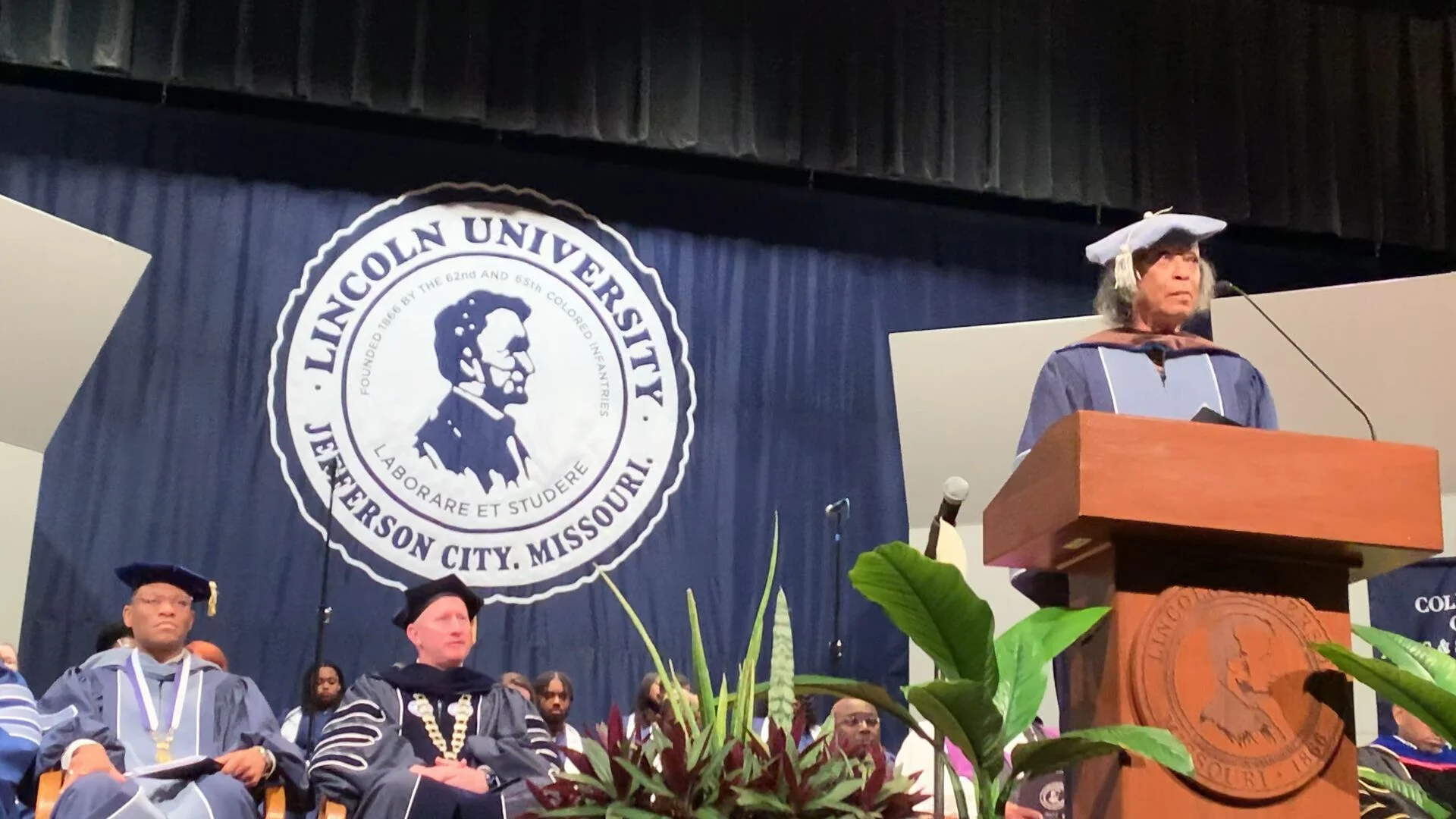
The enrollment numbers at Lincoln University tell a story the university’s founders never imagined.
According to Lincoln University enrollment data, white students now outnumber Black students on campus 921 to 870 as of fall 2025. This demographic shift has prompted questions about what it means to be a historically Black college or university.
Lincoln is an HBCU. HBCUs were founded to educate Black Americans at a time when higher education was largely off limits to them. Lincoln’s mission was simple: provide access. Its founders were Black Civil War soldiers who traded their weapons for the chance to build something lasting.
Lincoln’s total enrollment reached 2,256 students in fall 2025.
Experts and administrators point to geography as a primary driver of the increasing number of white students. Lincoln sits in Jefferson City, the state capital, a city that is not predominantly Black. That location means the university draws heavily from surrounding mid-Missouri communities, which are largely white.
Leading Lincoln University is President John Moseley, now in his fifth year. Moseley is white, a rarity in the HBCU world. According to a 2023 report by the American Council on Education, only 3.5% of HBCU leadership is white. Moseley is the first white president in Lincoln’s history since its founding.
Moseley pushes back on the idea that his race disqualifies him from leading an HBCU.
“Look at the results of the institution: It’s flourishing right now across the spectrum,” Moseley said. “Each of the last two years, we’ve had our highest retention rate.”
The retention rate has topped 64%, the highest in over 30 years, which is almost closing in on the national average. Lincoln University set its own benchmark at 50%.
Moseley traces the demographic trend back to the landmark 1954 Supreme Court ruling in Brown v. Board of Education.
“Within three years of that decision, Lincoln was 33% white,” Moseley said. “Within six years, a Jefferson City college had closed, and the University of Missouri was majority white.”
Moseley also pushed back on the idea that his tenure has accelerated the trend of white student enrollment, arguing the opposite is true.
“In the early ’90s, the student population was probably 75% white,” Moseley said. “We actually added to the number of Black students attending this historically Black college.”
That commitment, Moseley said, is personal.
“I grew up believing in every person and wanting the same thing as Dr. King. I grew up in a community where I was in the minority with people of color as teachers, administrators, and some of my best friends. My goal as a youth was to ensure my friends had opportunities regardless of their race, and I get to do that today. I fully support the mission of Lincoln and what an HBCU represents. I don’t think my hiring is any mark of a shift in HBCU leadership,” Moseley said.
Despite the numbers, Moseley is firm that the “H” in HBCU is not going anywhere.
“This institution was founded on the principle of education for free Black slaves,” he said. “I believe that importance today is just as significant as it was in 1866.”
Success! An email has been sent to with a link to confirm list signup.
Error! There was an error processing your request.
Moseley also pointed to the university’s international reach as evidence of its commitment to diversity. Lincoln draws students from 47 different countries, a figure he said many predominantly white institutions actively pursue.
“Many universities are striving to have what we have from a racial diversity standpoint,” he said. “That’s quite an accomplishment.”
Tobias Raphael Morgan, Lincoln’s vice president for student affairs, said the HBCU label is not just about who attends. It is about what the institution was built to do and what it continues to deliver.
“HBCU to me means cultural family, resistance, and empowerment,” Morgan said. “These institutions were designed to provide access to free African American slaves. Now, with integration, they’ve provided even more access.”
Morgan said Lincoln’s traditions of homecoming, Divine Nine Greek life, and alumni mentorship continue to anchor the campus in its roots regardless of who fills the seats.
“Even though Lincoln is a very diverse institution, it still holds to its true HBCU roots stemming back from its founders,” Morgan said. “I don’t see that changing. I see it being a strength.”
Lincoln University graduate Ryan Wilson also said the demographic shift is a product of where the university sits.
“Jefferson City sits in the middle of the state,” Wilson said. “Jefferson City is not a predominantly Black community. Harris-Stowe sits in the middle of St. Louis City. That’s a big difference between Harris-Stowe and Lincoln University.”
Wilson said he chose Lincoln after applying late and being welcomed through open enrollment, a second chance that changed his life.
“Lincoln gave me a sense of home away from home,” Wilson said. “The professors, the janitorial staff, the ladies in the cafeteria, they all cared about me. They all made sure I was going to class.”
But even as that demographic battle continues, Wilson said what has never changed is the feeling on campus.
“If you attend or graduate from an HBCU, you are coming from a family,” he said. “That family is looking out to support you all the way through.”
With Missouri home to only two HBCUs, Wilson said the stakes of protecting Lincoln’s identity could not be higher.
“If it wasn’t for our colored infantry, we wouldn’t have Lincoln University today,” Wilson said. “Lincoln University is a sense of home and community that we need to continue.”
Moseley said he hopes every student who walks through Lincoln’s doors, regardless of race, leaves better for the experience.
“I believe all students that choose Lincoln University benefit from the presence of people who don’t necessarily look and think like them,” Moseley said. “That’s how you become a better person. But at the same time, we want every student on this campus to be comfortable being who they are.”