
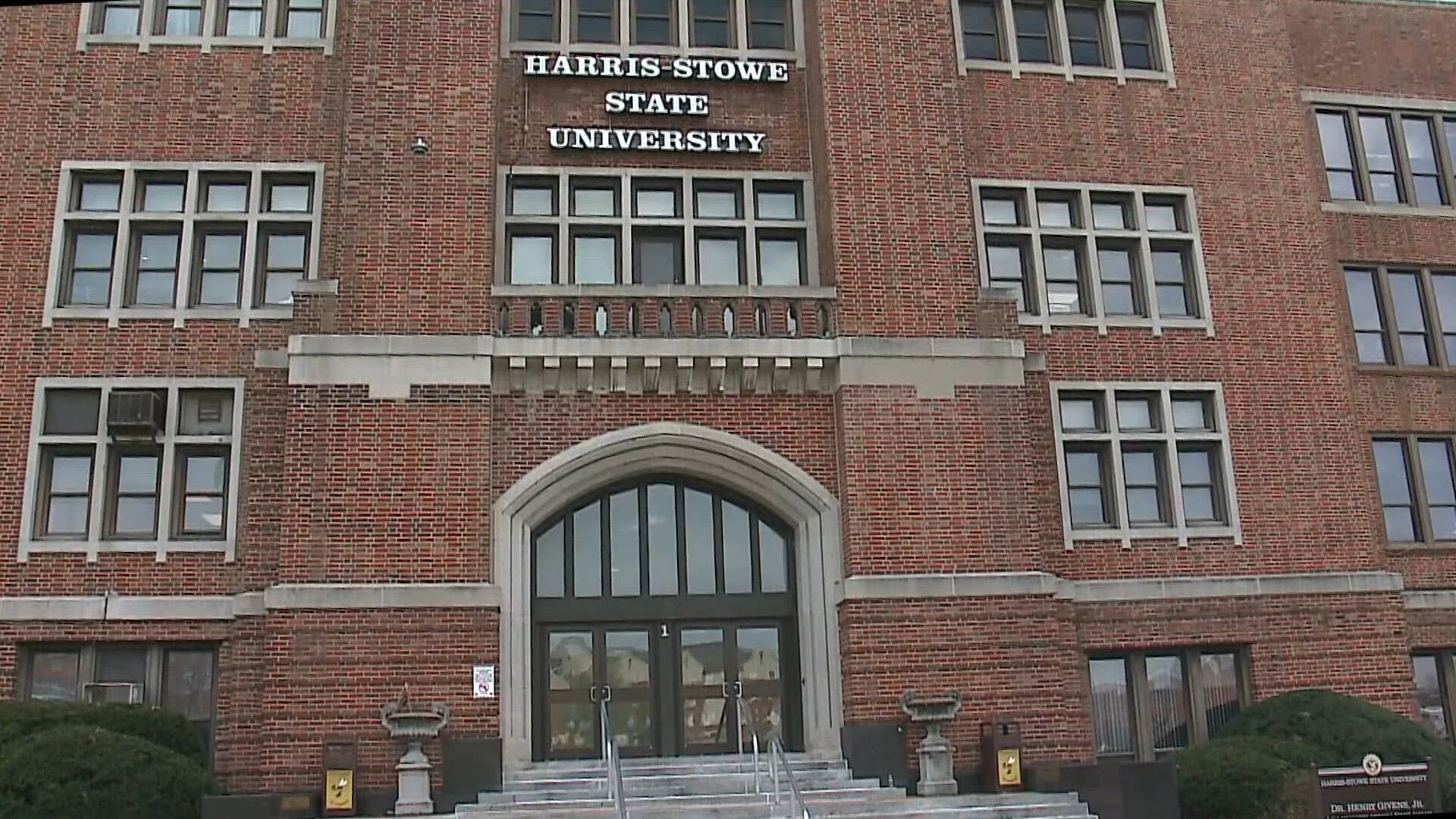
A bill that would provide more funding for Missouri’s historically Black colleges and universities was discussed in the Missouri House Higher Education and Workforce Development Committee on Tuesday.
House Bill 3416 would create the “Strengthening HBCUs Fund,” which will take 1%, or approximately $3.3 million, from the state’s excursion gambling proceeds and another 1% from the Classroom Trust Fund, another $3.3 million, in addition to gifts and donations, and split the funds between Lincoln University and Harris-Stowe State University.
The bill’s sponsor, LaKeySha Bosley, D-St. Louis, said the bill will allow the schools to focus on funding infrastructure.
“This is a fair, straightforward and necessary piece of legislation that seeks to correct long-standing inequities while investing in the future of higher education in Missouri,” Bosley said.
The bill was proposed in response to nationwide underfunding of HBCUs. According to a 2023 release from the U.S. Department of Education and Agriculture, 16 of the country’s 19 HBCUs have been underfunded by a combined $13 billion from 1987 to 2020. One of those schools is Lincoln University, which has only received one land grant match from the state since a federal mandate allowed states to do so in 2000. The decision is one that Bosley considers “morally incorrect.”
“It shows the disinvestment and what we consider to be important institutions of higher education in the state and those scholars that they serve,” Bosley said.
Lincoln University’s President John Moseley, who testified during the House hearing, acknowledged how crucial that land grant match was to the growth of the school. The school has become the fastest-growing university in the state over the last two years, with a 12.1% increase in student population over the last five years. With the school’s continued growth, Moseley said funding is crucial.
“There’s a great likelihood that we will max out our on-campus housing capacity in the fall of ’26,” Moseley said. “And so being able to identify where you can potentially pull funds over the next few years to pay for a project that would allow you to provide educational opportunities to a greater number of students would be very important.”