
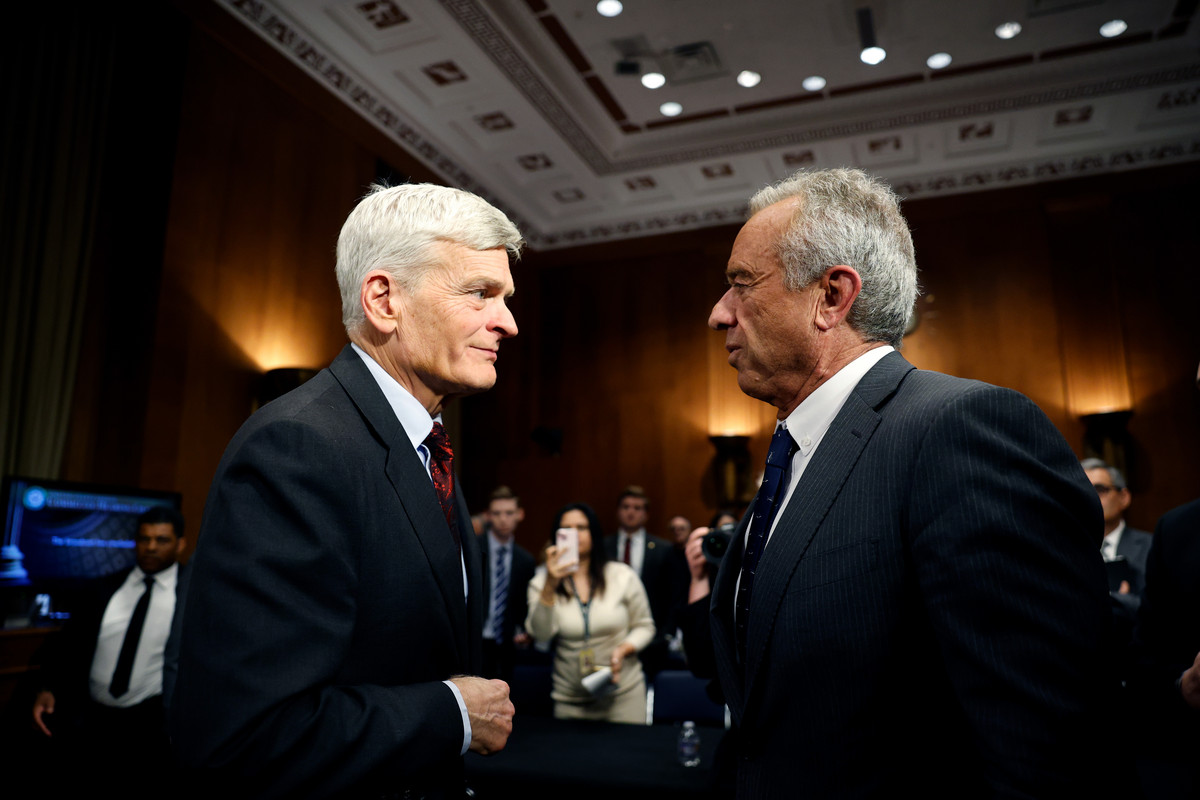
Sen. Bill Cassidy, R-La., clashed with Health Secretary Robert F. Kennedy Jr. during a Senate hearing Wednesday afternoon, criticizing the secretary over his vaccine policy and abortion medications and debunking an interpretation of a scientific study.
It was a change in tone from the senator, who had at a Finance Committee hearing earlier in the day limited his questions for Kennedy to fraud and health care costs.
Kennedy’s afternoon hearing was before the Senate Health, Education, Labor and Pensions Committee, which Cassidy chairs. It was the health secretary’s first appearance before the committee in nearly a year.
During the afternoon hearing, Cassidy said the public’s trust in vaccines has worsened over the last year due to false statements.
“I am a doctor who has seen people die from vaccine-preventable diseases, and when I see outbreaks numbered in the thousands, and people dying once more from vaccine-preventable diseases, particularly children, it seems more than tragic,” Cassidy said.
Cassidy cast the key vote to confirm Kennedy last year after securing a series of promises from Kennedy, including that he would preserve federal vaccine recommendations and regularly appear before the committee. Kennedy has not kept those promises, and Cassidy has limited his criticism of the health secretary to posts on social media and press statements.
Wednesday afternoon’s hearing was the seventh Kennedy has attended over the last week. Throughout the hearings, he’s faced blistering criticism from Democrats over his vaccine policy and the ongoing measles outbreaks in the U.S.
Kennedy insisted that the U.S. has done better than any other country at limiting the spread of measles and denied responsibility for the outbreak, which started in a religious community in West Texas in late January 2025.
“You blame the Mennonites. You blame immigrants. You blame the globe,” Sen. Lisa Blunt Rochester, D-Del., said Wednesday afternoon. “Do you take any responsibility in your role for the situation that we are in with this measles epidemic?”
“As I said, the measles epidemic began before I came into office,” Kennedy responded.
Kennedy was confirmed as health secretary in February last year, but he was a prominent anti-vaccine activist in the decade before he took office.
Cassidy also grilled Kennedy on political interference at the Centers for Disease Control and Prevention, demanding to know whether President Donald Trump’s next pick for CDC director, if confirmed, would be able to make decisions “independently,” without pushback from Kennedy. The agency’s last director, Susan Monarez, was in the role for just 29 days. She was pushed out, she said, for refusing to sign off on vaccine policy changes from Kennedy and his handpicked vaccine advisory panel.
Kennedy said Dr. Erica Schwartz, the new CDC pick, would be able to operate independently. At a House hearing Tuesday, however, Kennedy would not commit to implementing the CDC director’s vaccine guidance without interference.
Vaccines became the focus once again when Sen. Bernie Sanders, I-Vt., asked whether Kennedy believed it was “simply untrue” that vaccines reduced infant mortality rates in the U.S.
Kennedy has long argued that infant mortality decreased not because of vaccinations but due to improvements in sanitation and nutrition. He cited a study that, he said, made this case. Cassidy went on to look up the study and later in the hearing told Kennedy that the health secretary had misrepresented the findings. (Cassidy and Kennedy had a similar interaction last year, during the secretary’s confirmation hearings, where Cassidy picked apart a study touted by Kennedy mid-hearing.)
Cassidy, who is facing a primary challenge next month, also pressed Kennedy on abortion pills, asking for an update on how the Trump administration plans to address access to the medications. The senator has been pushing for the Food and Drug Administration to put limits on abortion pills, including reinstating in-person dispensing requirements. Kennedy declined to answer, citing ongoing litigation — a comment Cassidy said was “frustrating.”
Wednesday’s back-to-back hearings marked Kennedy’s first appearance before Cassidy since a confrontational Senate Finance Committee hearing in September.
In January, Kennedy overhauled the childhood vaccine schedule, reducing the number of recommended diseases for children to be vaccinated against from 18 to 11 — a move Cassidy later said in a post on X would “make America sicker.” The changes removed recommendations that all babies should be protected against hepatitis A, hepatitis B, RSV, dengue and two types of bacterial meningitis.
In March, a federal judge blocked those changes and put on hold the new members Kennedy appointed to the CDC’s vaccine advisory committee. The administration hasn’t yet appealed the ruling. But Kennedy signed off on new rules for the committee that could make it easier to work around the court’s decision.
Vaccines were not the only point of contention at Wednesday’s hearings. TrumpRx, the administration’s self-pay platform for prescription drugs, was brought up several times. The site currently offers discounts on 80 medications.
Trump has claimed that the U.S. now offers the lowest prices in the world, thanks in part to deals made with drugmakers. Details of these deals, however, remain scant.
“All these members say that they’re concerned about TrumpRx and people not getting fair prices. You could settle this by giving me tomorrow all the details,” said Sen. Ron Wyden, D-Ore., who later called the program “a sweetheart deal for Big Pharma.” Wyden is the ranking member of the Finance Committee.
“Why don’t you do an agreement yourself?” Kennedy responded. “You’ve had power to do that for 20 years and haven’t done it, and that’s why I was forced to do it.”
While Kennedy insisted that TrumpRx offered major price reductions on brand-name medications, the U.S. continues to pay the highest prices in the world for prescription drugs. Many of the drugs listed on TrumpRx already have cheaper generic versions or can be found in savings programs available elsewhere. The deals also don’t affect what people with private insurance or Medicare pay for the drugs.