
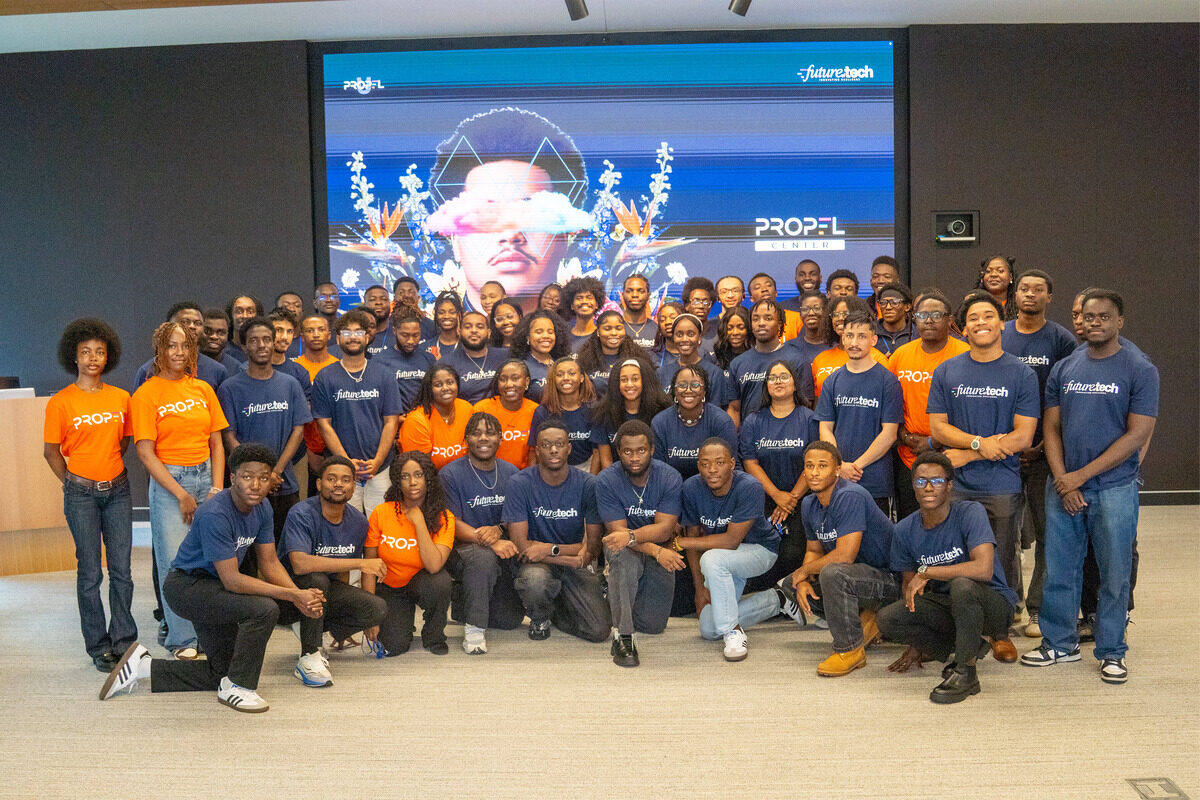
There’s a difference between talking about the future of tech and actually building it. That’s what stood out from the first-ever Future of Tech Innovation Challenge National Finals hosted by PROPEL Center in Austin, Texas from April 15 to 17. The focus was clear: give HBCU students the space to lead, create, and be seen.
This wasn’t another surface-level diversity initiative. It points to what’s possible when Black students have real access to tools, training, and opportunity in AI and emerging tech. That’s where the shift is happening.
The bigger picture matters. Black professionals make up about 12 to 13 percent of the workforce, but only 7 to 8 percent of tech roles and less than 3 percent of AI leadership. That gap isn’t about talent. It comes down to access and exposure. Programs like this are starting to close that gap in a meaningful way.
The reach alone is significant. More than 200,000 students across 89 HBCUs were engaged. Over 1,100 applied. Seventy finalists from 17 schools advanced to the final stage. But the real story is in the work itself. These students developed AI-powered solutions focused on real issues across healthcare, education, cybersecurity, energy, and media.
And this is where it stands out.
These weren’t just academic ideas. The projects were practical, thoughtful, and built with real communities in mind. That perspective matters. If technology is shaping the future, the people building it should reflect the world it serves.
Through PROPEL U, students gained hands-on experience with AI, worked alongside mentors, and connected with industry leaders. This kind of access isn’t always easy to come by, especially for underrepresented communities. Creating that bridge changes outcomes.
The winning teams reflected both innovation and execution. Morgan State University earned first place and $35,000. Fisk University followed with $25,000, and Huston-Tillotson University placed third with $15,000. Beyond the awards, the value is in what comes next. Visibility. Credibility. Access to opportunities that can shape careers.
Leadership at PROPEL Center is thinking long-term. CEO Myla Calhoun has positioned this as more than a competition. It’s a pipeline. A way to ensure HBCU students are prepared and positioned to lead in tech. Harriette K. Burrell also emphasized the importance of giving students the environment to step fully into their potential.
What came out of Austin is simple. When access meets opportunity, innovation follows.

For The Hype Magazine, this story hits different because it sits at the intersection of culture and innovation. We’re not just talking about tech. We’re talking about influence. About who gets to build the systems that shape how we live, work, and connect.
And right now, that story is expanding.
What PROPEL Center has done with the Future of Tech Innovation Challenge has set a new tone. One where HBCU students aren’t an afterthought in innovation conversations. They’re the headline.
If this is the first year, the question isn’t whether this matters. It’s how big this becomes.


