
By Meredith Mohr
Dr. Beverly King Miller of Prairie View A&M University is recognized as a Faculty Rising Star, an honor that reflects the impact she has made over more than three decades in education. She has never chased awards, instead measuring success through the confidence and accomplishments of her students. Their nomination letters reflect a belief she has long modeled in the classroom: that she is not a gatekeeper, but a guide who sees students’ potential long before they do.
On a bright morning in Prairie View, Texas, that belief is alive in one of the University’s farm classrooms. Goats bleat, hibiscus plants grow near the greenhouse, and eggs tremble in an incubator, tiny lives preparing to emerge. This interactive, breathing classroom stage is where Dr. Miller prefers to lead her classes. Beneath a wide-brimmed hat, she smiles as her science education students debate where chemistry ends and biology begins.
This is science that students can touch.
As part of her philosophy of education, she believes learning should be fun and connected to the real world, which she models through experiential learning activities.
“This is more impactful than any lecture,” Dr. Miller said. “Educators need these opportunities to build their content knowledge so they can translate it into lesson plans for their students. If they understand how chemistry and biology are interwoven, they can demystify these subjects for the future generation and disrupt misconceptions about who is able to learn and be successful in STEM.”
A Calling That Started Early
Dr. Miller grew up in Panama, separated from her brothers for years, while immigration slowly reunited her family. When they finally arrived in the U.S., Beverly, who was just a child herself, became their unofficial teacher, something they still tease her about for how seriously she took her role. Summers were spent mentoring disadvantaged youth in New York City, which led to a career in the classroom in Chicago, where she gravitated toward students whom others labeled “too difficult” or “too different.” Helping them build confidence cemented her purpose: education changes lives when students feel seen.
Degrees followed — a B.A. in Psychology from Nyack College, an M.A. in Teaching from National-Louis University, and a Ph.D. in Multicultural Education from the University of New Mexico — each step fueling a mission to open doors in STEM for those historically shut out. But as she advanced at predominantly white institutions, she found herself reduced to a stereotype.
“The battles at the time for me were constantly proving myself competent to students and colleagues who had the assumption that, due to my phenotype, I was not educated or smart enough,” Dr. Miller said. “I was constantly questioned and had to explain myself. I would travel to Panama for my STEM and Literacy Camp that I started. There, I faced the opposite: how much could I give to them? The assumption was that I was smart and educated, and bringing knowledge that they needed and wanted. In Georgia, I was a ‘Black science professor.’ I wanted to be a science professor who happens to be Black.”
Teaching Science to Generations
That realization guided Dr. Miller to Prairie View A&M University in 2021, a place where her heritage and her scholarship could strengthen each other. The adjustment wasn’t effortless; it took time to learn the culture and traditions of PVAMU and find roots in a system that values relationships and rites of passage for inclusion, said Dr. Miller, who is now an assistant professor of science education in the Whitlowe R. Green College of Education.
But soon she was no longer an outsider learning a culture. She was essential to shaping its future, as she tackled rebuilding PVAMU’s science teacher education pathway. Dr. Miller redesigned how teachers learn to teach, with courses that push instruction far beyond lecture and the classroom.
Instead, students observe solar flares at the physics observatory, explore ecosystems on the farm, and witness the development of chicks hatching from eggs. Through her “ReadingTalks” method, students teach foundational theory to their peers, creating presentations that engage while modeling practice that builds both competence and voice.
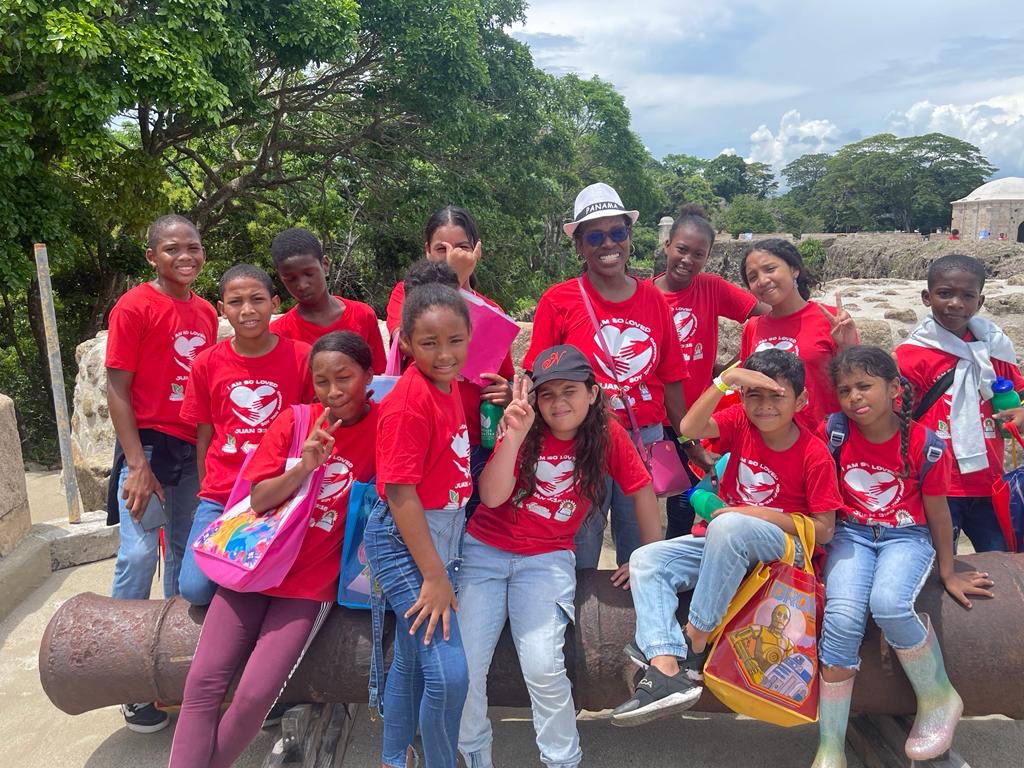
Her research keeps pace with her teaching. Through the TexSTEM research initiative, she launched the “Pizza, Pop, and Study Prep” sessions — an inventive pilot model that seems to be positively impacting the content exam pass rate of the teacher education candidates. Internationally, her Ventaja Panama program, now in its ninth year, provides STEM access to underserved youth in the country while also providing teacher training and certification through PVAMU. And as Co-Principal Investigator on a National Science Foundation Noyce Grant, she is responsible for planning the immersive campus field experiences to strengthen STEM identity for future educators and STEM career candidates.
“Who gets to be seen as a scientist?” she asks. She fights to ensure the answer is: anyone.

“Reading my students’ words in the awards letters of recommendation deeply affirmed the value of my work here at PV and showed me that they truly understand that, although I am rigorous and demanding at times, I expect high-quality work and professionalism from them. I am committed to encouraging them to reach higher—to pursue master’s and doctoral degrees and to believe in their potential. My students know that I care deeply about them and that my goal is to help them become well-prepared, confident professionals who model excellence needed to mentor the future doctors, teachers and STEM professionals.”
Planting What Comes Next
That legacy deepened when she brought her daughter and grandson to visit the University Farm and the Poultry Center. The warmth they received affirmed everything she believes education should be: welcoming, empowering, and rooted in community.
“A simple act of kindness reminded me of what makes Prairie View A&M University so special—the sense of community, care, and belonging that we extend not only to our students and colleagues but also to their families and future generations,” Dr. Miller said. “In that moment, I saw how the legacy of PV is passed on—through everyday gestures that communicate inclusion and pride in who we are as an institution.”
Watching her grandson light up with wonder as he explored and interacted with the staff, she saw not just her own story reflected, but the stories of the students she teaches.
Looking ahead, Dr. Miller hopes to contribute to PVAMU’s pursuit of R1 research status by expanding her scholarship and collaborative research efforts with colleagues and graduate students. She also plans to continue building STEM pathways and partnerships that elevate the University’s presence in regional, national, and international STEM communities through initiatives such as the International Science and Engineering Fair and the Society for Science.
At the heart of her work remains a philosophy shaped in childhood and refined through decades of service: all children can learn when given the opportunity, support, and instruction they deserve. For Dr. Miller, preparing educators who believe that truth is one of the most powerful ways to create lasting change.