
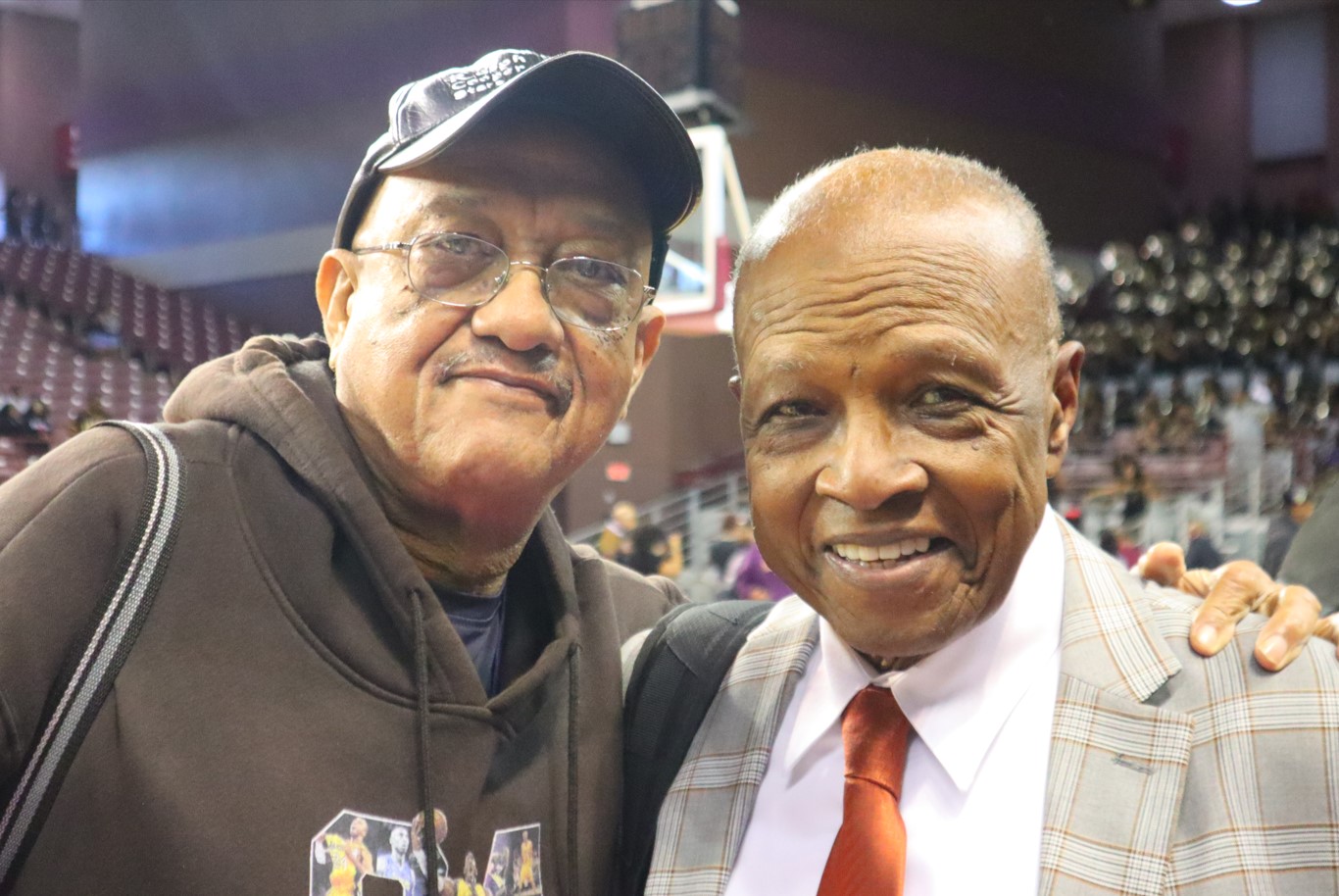
HOUSTON — Two of the most impactful voices in Black media died five weeks apart this spring, and Ralph Cooper says their deaths should force HBCUs to reckon with a larger, rarely mentioned loss: supporting Black media and Black businesses, which helped build their institutions.
The Houston broadcasting legend joined HBCU Legends Podcast to remember Charlie Neal and Tony Brown, and to press today’s HBCU leaders on why so many have drifted from those Black community ties.
Legendary broadcaster Ralph Cooper reflects on the impact of Charlie Neal and Tony Brown. | HBCU Legends, HBCU GO
Remembering Charlie Neal and Tony Brown
Charlie Neal, the broadcaster known as the voice of HBCU sports, died May 13 at 80. For 24 years, he anchored Black Entertainment Television’s sports coverage as lead play-by-play announcer and executive producer, carrying Black college football and basketball to a national audience at a time when major networks looked away.
Curtis Symonds paired Neal in the BET broadcast booth with Pro Football Hall of Famer Lem Barney and Doug Williams for game coverage. After BET stepped away from sports, Neal called the first football game on ESPNU as Morehouse faced Benedict. Later, Symonds, now HBCU GO’s president, brought him back to the airwaves for the fledgling digital network.
Tony Brown died June 17 at 93 at his home in Newport News, Virginia. He hosted “Black Journal,” later renamed “Tony Brown’s Journal,” which became the longest-running series in PBS history. On a public-television platform dominated by white voices, Brown never softened who he was or what he had to say. He confronted inaccuracies on the air and demanded that Black stories be told without compromise. His interviews with figures such as Angela Davis and Jesse Jackson set the standard for depth in Black media.
“Both were iconic individuals,” Cooper said. “In regards to the inspiration and the encouragement that they gave to people who came behind them, they were both very, very inspirational.”
The Art of the Interview
Cooper noted that Neal and Brown shaped the way he interviews, along with former late-night hosts Johnny Carson and Larry King. He studied all three, watching how they drew out a guest’s important life experiences, history, and ambitions without ever taking over the conversation.
“They had the ability to get people excited, and then they would back off and let the people talk,” Cooper said. “They didn’t try to dominate the program.”
That restraint, Cooper said, is the discipline today’s broadcasters most often miss. He urged young podcasters to study Brown’s archived episodes rather than center themselves. “They need to pull up the tapes of Tony Brown,” Cooper said.
The Howard Pipeline and the Standard of Being a Pro
Brown’s reach extended well past the screen. He founded Howard University’s School of Communications in 1971 and served as its dean until 1974. Brown returned to the HBCU academic world decades later as the first dean of Hampton’s Scripps Howard School of Journalism and Communications.
He also built the “Buy Freedom” campaign, urging Black consumers to spend at Black-owned businesses, the same economic message Cooper later raised in the conversation about current HBCU athletic departments.
The Howard program Brown started became a pipeline for Black sports journalism. The roll call includes former NFL Network reporter Jim Trotter, who became the first Black president of the Pro Football Writers of America and challenged the league over newsroom diversity. The network’s senior national reporter, Steve Wyche, was inducted into the 2026 Black College Football Hall of Fame in June 2026. Also, Terez Paylor, the Yahoo Sports writer and Pro Football Hall of Fame selector, died suddenly in 2021 at 37.
Stan Verrett enjoyed a 25-year career with ESPN, as did Fox Sports’ play-by-play broadcaster Gus Johnson and Atlanta sports writer Orlando Ledbetter.
Wyche, in a Black College Football Hall of Fame interview, preached the lessons of Neal — that carrying yourself as a professional, in dress and in bearing, earns respect and opens doors.
“Tony Brown was a LEGEND. As a young boy growing up in California in the 1960s and ‘70s, I looked forward to his show because he seemed to be the only media figure speaking to Black issues. Looking back, I can see where his intelligence and willingness to confront difficult issues head-on impacted me in my chosen profession,” Jim Trotter told HBCU Legends.
A Forgotten Mission Plagues HBCUs
The tribute turned pointed when Cooper weighed how HBCUs treat Black media and Black business today. He said many campus decision-makers do not know how closely those forces were tied to the schools’ rise, and that disconnect is part of what he wants them to confront.
“The respect is gone,” Cooper said.
He said some athletic departments now overlook Black-owned outlets because they assume social media and relationships inside white media make those platforms unnecessary.
“They forgot their role,” Cooper said of campus communicators who, in his view, no longer promote their own athletes and coaches through Black media.
Cooper tied part of the drift to hiring practices. Black journalists who covered newly integrated white programs in the South, he said, never abandoned the Black schools that raised them. However, many coaches now working at HBCUs came up the opposite way, arriving from the same white universities that once ignored them and bringing none of that institutional memory with them.
Thus, ignoring the connection that coaches like Eddie Robinson and Marino Casem once had with the media.
“You may be the head coach, but you’re not the first head coach they’ve had,” Cooper said. “And you definitely not the best they’ve ever had.”
The longtime broadcaster said that the Black media veteran who connects an outside hire to the community and is then discarded once the introduction is made becomes “the lost man.” The athletic directors and coaches now launching their own podcasts are welcome to do so, Cooper said, but not at the expense of the professionals who have done the work for decades.
“I have no problem with them doing that. But don’t forget those of us who are doing that, and we do it on a professional level also, at a high level,” Cooper said.
Cooper’s verdict was blunt. The Black schools, he said, have allowed themselves to become “a minor league situation in regards to their own” by losing sight of Black media and Black business—the very support that helped build them. A tenant, Tony Brown, advocated for on his programs for many years.
What Comes Next
Cooper is not slowing down to make the point. He still broadcasts weekday afternoons on KCOH in Houston, and plans to add a new evening program that will launch in August.
“Age is just a number,” he said. HBCUs should reconnect with the Black media that chronicled their rise before more of that history disappears with the men who made it. HBCU leaders should act now to restore those ties before falling out of touch with the students, alumni, and community.