
Extending Howard’s Reach
Through the partnership, Howard has served 8,589 scholars attending 253 high schools in 91 cities. Participating communities include Washington, D.C.; Nashville, Tennessee; New York City; Phoenix, Arizona; and Jackson, Mississippi.
NEON courses were led by Howard faculty members, and the model pairs university faculty with high school educators and Howard undergraduate and graduate students who serve as teaching fellows. (Credit: National Education Opportunity Network)
The university has offered eight courses through the initiative, spanning criminal justice, environmental studies, college algebra, leadership, psychology, data analytics, and technology ethics. Courses have been led by Howard faculty members including Bahiyyah Muhammad, Ph.D.; Janelle Burke, Ph.D.; Lifoma Salaam, Ph.D.; Moussa Doumbia, Ph.D.; Meenakshi Nerolu, Ph.D.; Mohammed Saliou Camara, Ph.D.; Oritsegbubemi Ayu, Ph.D.; Amy Yeboah Quarkume, Ph.D.; and environmental justice advocate Kari Fulton.
The model pairs university faculty with high school educators and Howard undergraduate and graduate students who serve as teaching fellows. These fellows provide academic guidance, mentorship, and a tangible connection to the Howard student experience.
To date, 150 Howard students have served as teaching fellows. Among those surveyed, 95% reported that they grew professionally through the experience, while 94% described the fellowship as one of their most valuable experiences of the year. The structure creates benefits on both sides of the virtual classroom: high school scholars receive support from near-peer mentors, while Howard students gain experience in teaching, leadership, communication, and community engagement.
The results also extend beyond individual courses. At least 51 NEON scholars have matriculated at Howard, transforming an initial online encounter with the university into a full undergraduate experience on campus.
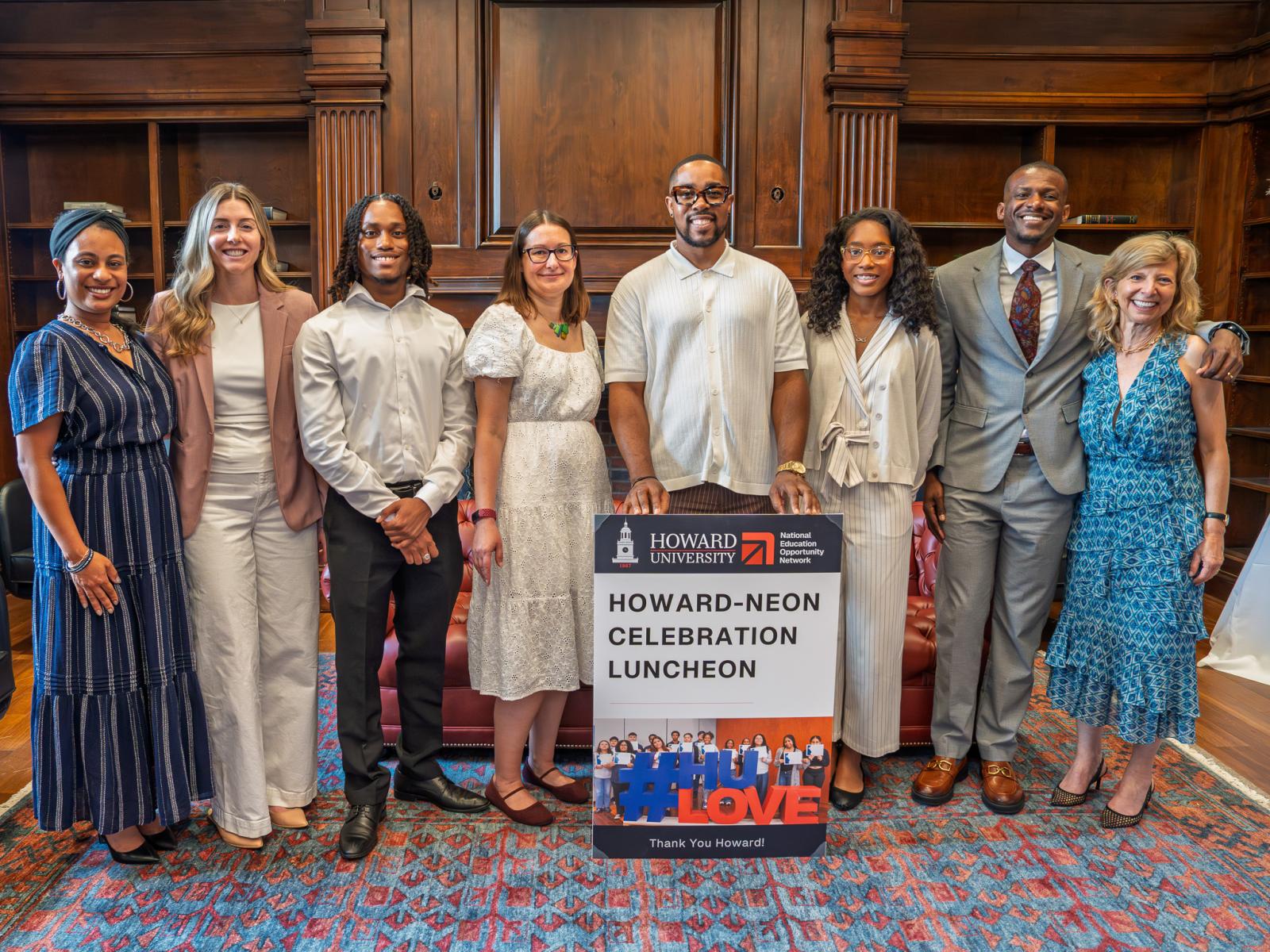
Howard and NEON celebrated the partnership’s continued growth during a June 11 gathering on the university’s campus. The event convened NEON leadership, Howard faculty members and teaching fellows, educators, and former NEON scholars who have since become Howard students and graduates.
The discussion centered on the role historically Black colleges and universities can play earlier in the educational pipeline, particularly for students who may live hundreds of miles from the nearest HBCU or have had little exposure to the institutions. Participants also examined how early access to Howard courses can strengthen students’ academic confidence, clarify the expectations of college-level work, and help young people recognize that they belong in higher education.


