
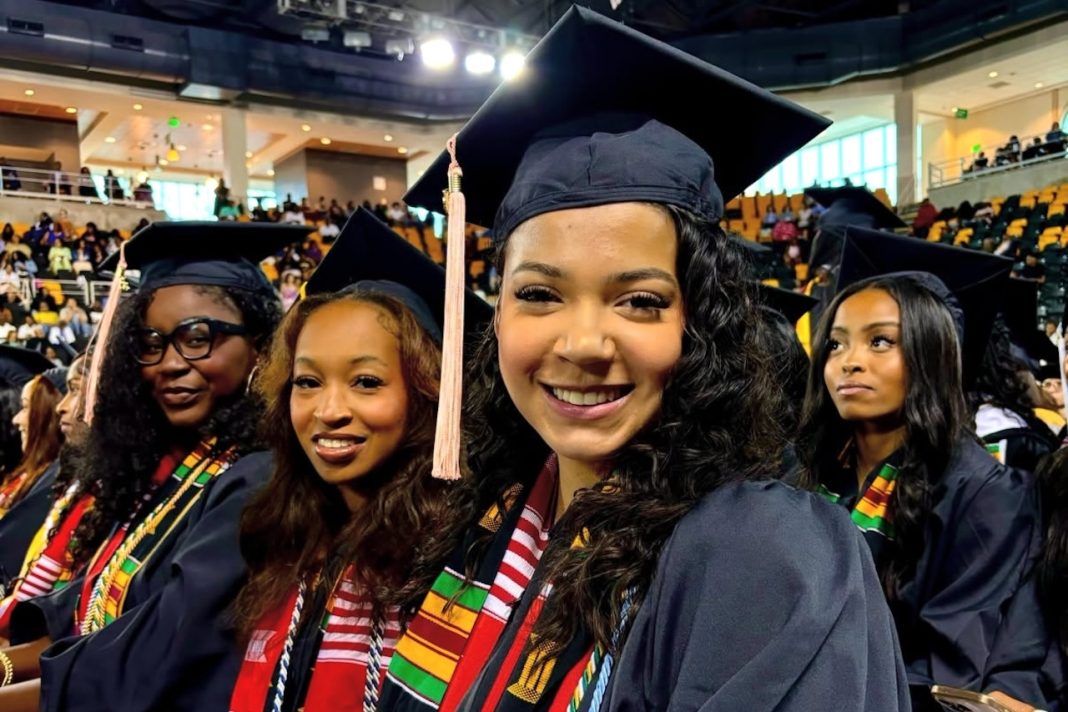
Xavier University of Louisiana ranks No. 4 among the nation’s top private historically Black colleges and universities in Forbes’ first-ever ranking of HBCUs, released Aug. 2. Forbes separately ranked the nation’s top private and public HBCUs, with Xavier the only Louisiana institution to make either Top 10 list.
A key strength highlighted by Forbes is Xavier’s longstanding role in preparing students for careers in medicine and health sciences. Xavier produces more African American students who go on to graduate from medical schools each year than any other university in the United States. Its programs include biology and pre-medicine, chemistry, pharmacy, physician assistant studies, medical laboratory science, neuroscience, health informatics and speech pathology.
Expanding Xavier’s Medical Pipeline
That pipeline is poised to expand through the Xavier Ochsner College of Medicine (XOCOM), a partnership between Xavier and Ochsner Health that is working toward accreditation needed to open the medical school. XOCOM received candidate status from the Liaison Committee on Medical Education in late 2025, clearing the way for an on-site evaluation at its planned Benson Tower location in the downtown New Orleans BioDistrict, the next step toward preliminary accreditation.
XOCOM has also assembled a leadership team and a faculty structure encompassing more than 200 faculty members from Xavier and Ochsner Health. Once fully accredited, XOCOM would be the only HBCU medical school in the Gulf South and the fifth allopathic HBCU medical school in the country.
Xavier’s Results and National Standing
The Forbes recognition comes as Xavier enters its second century. Founded in 1925, Xavier is the nation’s only historically Black Catholic university. Forbes reported undergraduate enrollment of 2,575, along with 207 graduate students and 315 students in the College of Pharmacy.
Xavier’s estimated undergraduate cost of attendance was $40,454, according to the ranking. The university had a six-year graduation rate of 48% and a retention rate of 70%.
Forbes also evaluated the earnings of graduates as part of its assessment of student outcomes and return on investment. Xavier graduates had median early-career pay of $56,700 and median mid-career pay of $104,100.
Howard University in Washington, D.C., ranked No. 1 among private HBCUs, followed by Spelman College and Morehouse College, both in Atlanta. Xavier was fourth, ahead of Hampton University, Tuskegee University, Fisk University, Talladega College, Clark Atlanta University and Tougaloo College.
North Carolina A&T State University ranked No. 1 among public HBCUs.
Forbes said its inaugural HBCU ranking uses many of the same measures as its 2026 ranking of America’s Top 500 Colleges, including graduation rates, graduate earnings and student debt. The methodology gives additional credit to institutions that produce strong outcomes for students receiving federal Pell Grants and also considers alumni leadership and achievement.
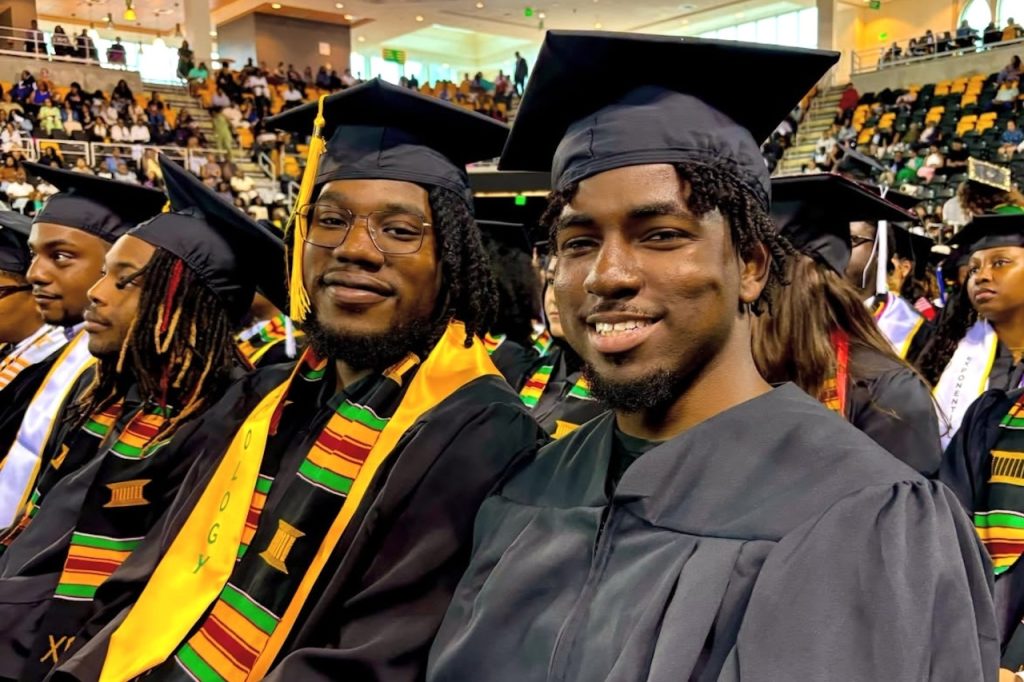 Xavier Earns No. 4 National HBCU Ranking. Photo provided by Xavier University of Louisiana.
Growth Meets New Financial Challenges
The ranking comes amid growing enrollment at HBCUs. Undergraduate enrollment at HBCUs increased 6.1% in fall 2023 from the previous year, nearly three times the 2.1% increase in undergraduate enrollment nationally, according to the National Student Clearinghouse Research Center.
While Xavier placed No. 4 among private HBCUs in Forbes’ new HBCU ranking, the publication’s separate 2026 ranking of colleges nationwide points to challenges that remain for HBCUs more broadly. Only two HBCUs, Howard University and Spelman College, made Forbes’ list of America’s Top 500 Colleges.
Forbes said HBCUs were held back in the national college ranking in part by lower graduation and retention rates. Fewer than 40% of students who enter HBCUs graduate within six years on average, compared with about 60% of freshmen at four-year colleges nationwide, according to data cited by Forbes.
Financial barriers are one factor behind those lower graduation rates, according to Forbes. In the 2023-2024 school year, 56% of HBCU students received federal Pell Grants, which provide aid to lower-income students, compared with 32% of undergraduates overall. HBCUs also typically have smaller endowments than predominantly white institutions, leaving them with fewer institutional resources to help students cover costs.
Those financial challenges could intensify under new federal student borrowing limits that took effect July 1. The changes, passed by Congress in 2025 as part of the One Big Beautiful Bill Act and signed into law by President Donald Trump, limit new Parent PLUS loans to $20,000 per year per dependent student, with a $65,000 aggregate limit. Graduate students are generally limited to $20,500 annually and $100,000 in total federal borrowing, while students in designated professional programs can borrow up to $50,000 annually and $200,000 in total.