
By Sym Posey | The Birmingham Times
Business and community leaders gathered in Birmingham last week to discuss how Alabama’s Historically Black Colleges and Universities can help shape the state’s workforce, strengthen economic development and create opportunities for the next generation of professionals.
The Birmingham Business Alliance hosted its 2026 Magic City HBCU Breakfast on Oct. 29 at The Harbert Center, bringing together educators, students, employers and community leaders to spotlight the vital role HBCUs play in preparing students for career success and driving economic growth.
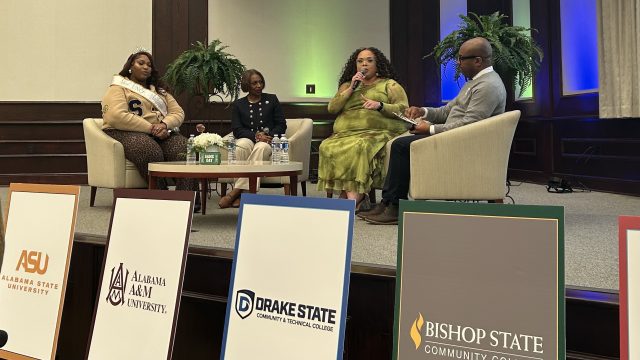
The breakfast featured a panel discussion with Dr. Yolanda Page, president of Stillman College; Jasmine Williams, EDPA manager of talent attraction and retention; and Gianna Ellison, a Stillman College student. Jermaine “Funnymaine” Johnson moderated the conversation.
The Future of Work
Throughout the discussion, panelists emphasized the importance of connecting students with employers before graduation, providing meaningful career experiences and ensuring Alabama offers competitive opportunities for graduates to remain in the state.
Page said preparing students for the future of work, particularly as artificial intelligence and automation reshape industries, must begin when they first enter college.
Stillman College is celebrating its sesquicentennial, marking 150 years of providing educational opportunities and access to students. As the institution looks to its next chapter, Page said preparing students for emerging technologies is essential to its mission.
“AI is one of those opportunities that we have to make sure that our students are in front of,” Page said.
The college introduced its Stillman Connect program last year, providing students with iPads to support their academic experiences and access to artificial intelligence, coursework and professional certifications.
Page emphasized that the goal is not simply to familiarize students with technology but to ensure they understand how to use it responsibly, ethically and effectively.
The college is also working to prepare faculty members to incorporate artificial intelligence into their teaching and curriculum.
Improving Career Readiness
Beyond technology, panelists discussed the importance of developing students’ communication, presentation and interpersonal skills alongside their academic preparation.
Page said institutions and employers must work together to ensure students have opportunities to develop the skills necessary to succeed in professional environments.
Ellison offered the student perspective, identifying job shadowing, active internships and mentorship opportunities as investments that could significantly improve career readiness.
She also reflected on the importance of leadership and stepping outside familiar environments.
“Success for my generation would be student leadership opportunities,” Ellison said, describing how she never imagined herself sitting on a panel alongside a college president.
The discussion also addressed how employers and institutions can better measure the long-term impact of workforce development investments.
Page said tracking students’ success should extend beyond their first job after graduation. She emphasized the importance of following graduates throughout their careers to understand whether academic programs are effectively preparing them for changing industry demands.
That information, she said, can help institutions evaluate their curriculum and adjust as employers’ needs evolve.
‘Connections early, connections often’
Williams discussed the importance of creating pathways between HBCUs and Alabama employers to ensure students can transition from college into meaningful careers.
She encouraged businesses to collaborate with institutions to develop programs aligned with their workforce needs, including internships, job shadowing and experiential learning opportunities.
Williams also highlighted the importance of retaining graduates in Alabama, noting that the state must provide competitive wages and career opportunities if it hopes to keep its talent.
“You don’t know what you don’t know,” Williams said, emphasizing the importance of exposing students to career possibilities they may not otherwise encounter.
She said early connections between students and employers can help them envision their futures in Alabama and understand the opportunities available beyond their campuses.
Page echoed that sentiment, stressing that employers should begin building relationships with students early in their college careers rather than waiting until graduation.
“Connections early, connections often,” Page said.
The panel also addressed the importance of paid internships, particularly for students balancing their education with financial responsibilities.
“Our students should not have to choose between experience and being able to pay their rent,” Page said.
Williams highlighted an initiative designed to help small businesses provide meaningful internship experiences while easing some of the financial burden on employers.
The program offers 12-week, project-based internships valued at $3,500, giving students opportunities to work on real-world projects while helping smaller companies access emerging talent.
Panelists also encouraged employers to look beyond traditional recruitment methods and establish direct relationships with HBCU career services offices, faculty members and administrators.
During the audience discussion, representatives from companies including Enterprise Mobility and Mercedes-Benz U.S. International asked how businesses could strengthen their partnerships with HBCUs and develop talent in fields such as information technology, cybersecurity, supply chain management and logistics.
Page encouraged employers to remain persistent in building those relationships and to work directly with institutions to identify students whose skills align with their needs.
She also invited businesses to Stillman College’s employer-focused “Chat and Learn” sessions, which allow students to engage directly with professionals and explore career paths.
A Call for Collaboration
The breakfast concluded with a broader call for collaboration among Alabama’s educational institutions, businesses and policymakers.
Birmingham Mayor Randall L. Woodfin also emphasized the importance of creating opportunities for HBCU graduates to build their careers in Alabama, identifying employment as a critical factor in retaining the state’s talent.
Addressing attendees, Woodfin said businesses must be intentional about developing relationships with colleges and universities and creating pathways for students to enter the workforce.
“What we do for our young people, what we do for our next generation, what we do for our current college students, at our 14 historically Black colleges and universities, in this state, is we got to give them two things—got to give them exposure. We got to give them opportunity,” Woodfin said.
He encouraged employers to begin cultivating those relationships early in students’ college careers, including through internships and apprenticeships.
“As early as the summer between their freshman and sophomore year, [they are] your future employee, your future team member, your future workforce,” Woodfin said.
Woodfin also called for greater collaboration among Birmingham’s educational institutions, business leaders, elected officials and community organizations, saying collective investment could help strengthen the city and state’s economic future.
“We can do some amazing things,” Woodfin said, but we’ve got to do it together.”
