
By Dr. Deborah Bailey
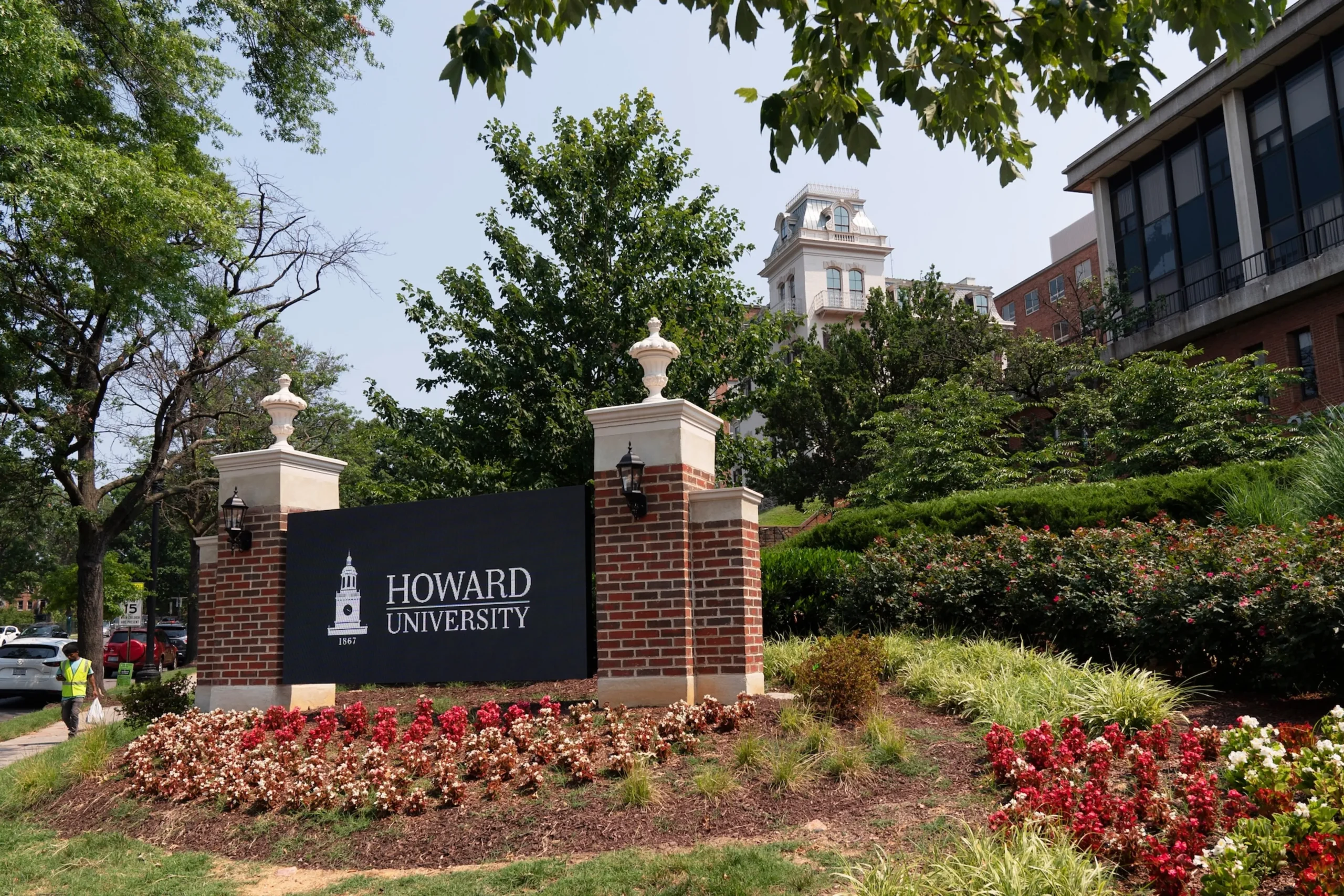
The Howard University HBCU Center for Research, Leadership and Policy is celebrating its fifth year of generating a growing network of research scholars and serving as a national hub for leadership and policy discussions on a wide range of topics related to America’s 107 HBCUs.
Amid the recent homecoming festivities on “the yard” at Howard’s Washington, D.C., campus, the university featured academic and intellectual milestones achieved within its 14 distinct academic divisions and more than 40 research institutes and centers.
The Howard HBCU Center is now among the research institutes providing intellectual leadership in the study, leadership and policy of higher education. It was expressly conceptualized by Howard’s former, now current interim president, Dr. Wayne A.I. Frederick.
Howard’s voice on HBCUs in America elevated to a research center
“President Frederick initiated this. He thought it was important that we have a center for HBCU research, leadership and policy at Howard University,” said Dr. Melanie Carter, associate provost, associate professor in the department of Educational Leadership and Policy Studies and director of the HBCU Center.
Given Howard’s return to Research I status, conferred by the Carnegie Foundation in 2025, Carter said many in the campus community thought it was essential for Howard University to gain national prominence in the study of all that is related to HBCUs as institutions.
“From the seed planted by Dr. Frederick, we’ve been able to begin advancing toward ambitious goals over these past five years, through programming highlighting the work of noted scholarship in the HBCU space as well as onboarding and developing new and advancing HBCU researchers. The HBCU Research Network is really a testimony to our efforts,” Carter said to members of the three cohorts of HBCU researchers gathered for the HBCU Center reunion, Oct. 16 at Miner Hall on the Howard University campus.
In five years, the Howard HBCU Center has funded 23 scholars, researchers and practitioners to advance their research, practice and policy initiatives in widely diverse areas of HBCU life, ranging from exploring faculty mentorship and leadership to the rise of artificial intelligence.
The Center also features a “Soul of the Yard” podcast, offering scholars, faculty and students an opportunity to talk about the current pressing issues impacting HBCUs, and a “Turning Pages” author talk series, interviewing authors of publications that connect with main topics in HBCU life. The Center most recently interviewed Dr. Ibram X. Kendi about his latest book, “Chain of Ideas: The Origins of Our Authoritarian Age,” in addition to authors Eddie Cole, “The Campus Color Line;” Jelani Favors, “Shelter in a Time of Storm” and others.
Re-imagining data and re-engineering its use to create hope
Ivory Toldson, director of Education, Innovation and Research at the NAACP and professor of counseling psychology at Howard, said the Howard HBCU Center has an essential role in creating the kind of scholarship that corrects the often narrow and negative narrative about Black communities and Black students.
Toldson, a member of the Howard HBCU Center advisory counsel, gave each fellow a copy of his new book, “Possibility and Statistics: How to Use Data to Illuminate Pathways to Success.”
“Statistics are so often used to document despair and predict failure in Black communities. We must re-imagine statistical data and re-engineer its use to create hope and cultivate human potential” Toldson said to the gathering.
One year – and a lifetime invitation to the HBCU Center family
Scholars spend one year pursuing a formal research topic outlined in a detailed application essay. Those selected represent HBCUs and non-HBCU institutions nationwide. The Center also seeks fellows whose HBCU-focused scholarship extends to their work in fields such as educational nonprofits and media.
Erinn Carter, one of the Center’s Cohort 3 fellows, said the fellowship has been responsible for advancing her work in Title IX policy and HBCUs.
“This fellowship year has been pivotal in taking my research to the next level and putting me in place to continue my work grounded in a tradition of Black scholarship,” said Carter.
“This fellowship year has been pivotal in taking my research to the next level and put me in place to continue my work grounded in a tradition of Black scholarship.” – Erinn Carter, Howard HBCU Center Cohort 3 Fellow
Carter (no relation to Melanie Carter) is hoping to utilize her research during her HBCU fellowship year along with her efforts as a recently named Ernest E. Just–Percy L. Julian Graduate Research Fellowship recipient for 2026–2027 to finally add a doctorate to her professional credentials at the end of the 2026-2027 academic year.
“The Howard HBCU Center is a family,” said Howard Center Associate Director for Administration and Programs Ebonierose Wade-Ndiaye. “Once you become affiliated with The Center, your ideas, creativity and contributions to HBCU research and thought leadership are always welcome.”
The Howard HBCU Center invites anyone interested in learning more about its work to participate in a virtual launch of the toolkit, “Belonging At HBCUs,” from 3-4 p.m. on Nov. 9.