
By Gary Fields
In his first public appearance after an election that soundly repudiated his policies, President Donald Trump turned to a topic both familiar and, given the context, surprising: not his policies or politics but his efforts to remake pieces of the city that is the backdrop to his presidency.
Despite Trump’s affinity for project management, though, with Democrats taking control of Congress, the work his administration is doing to change the physical face of the District of Columbia is sure to encounter far more roadblocks than it did for the first two years of his second term.
From the renaming of and renovation plans for the Kennedy Center to remaking a public golf course and erecting an arch 100 feet (30.48 meters) taller than the Statue of Liberty without its pedestal, Trump has been deeply involved in how D.C. looks. Democrats have voiced opposition but, in terms of power, have been in the wilderness.
The potential collision point between opposition oversight from Democrats and the Republican president’s preoccupation with the projects was evident in his last message to the American public before the election — and in his first afterward, too.
Both focused to some degree on his projects. On Monday, it was the reflecting pool in front of the Lincoln Memorial; on Wednesday, it was a tour of the under-construction White House ballroom, where he talked columns and steel beams and Corinthian designs.
The clouds of scrutiny are already gathering
Rep. Jared Huffman of California, the top Democrat on the Natural Resources Committee with jurisdiction over the Interior Department that is involved with operations at parks and federal lands, spent much of the past year probing and questioning Trump’s projects, laying the groundwork for this moment.
“We’ve pushed back against vanity projects that seek to transform treasured public spaces into gaudy tributes to Trump. We exposed corruption, uncovered the efforts to hijack America’s 250th birthday, demanded accountability, and offered a compelling alternative governing vision grounded in science, fairness, environmental responsibility, and the rule of law,” Huffman said in a letter to colleagues seeking their support to be chairman.
As chairman with a strong Democratic majority, “I will ensure that the Committee’s full investigative and oversight authority is leveraged to uncover wrongdoing, demand accountability, and protect the public interest,” he said.
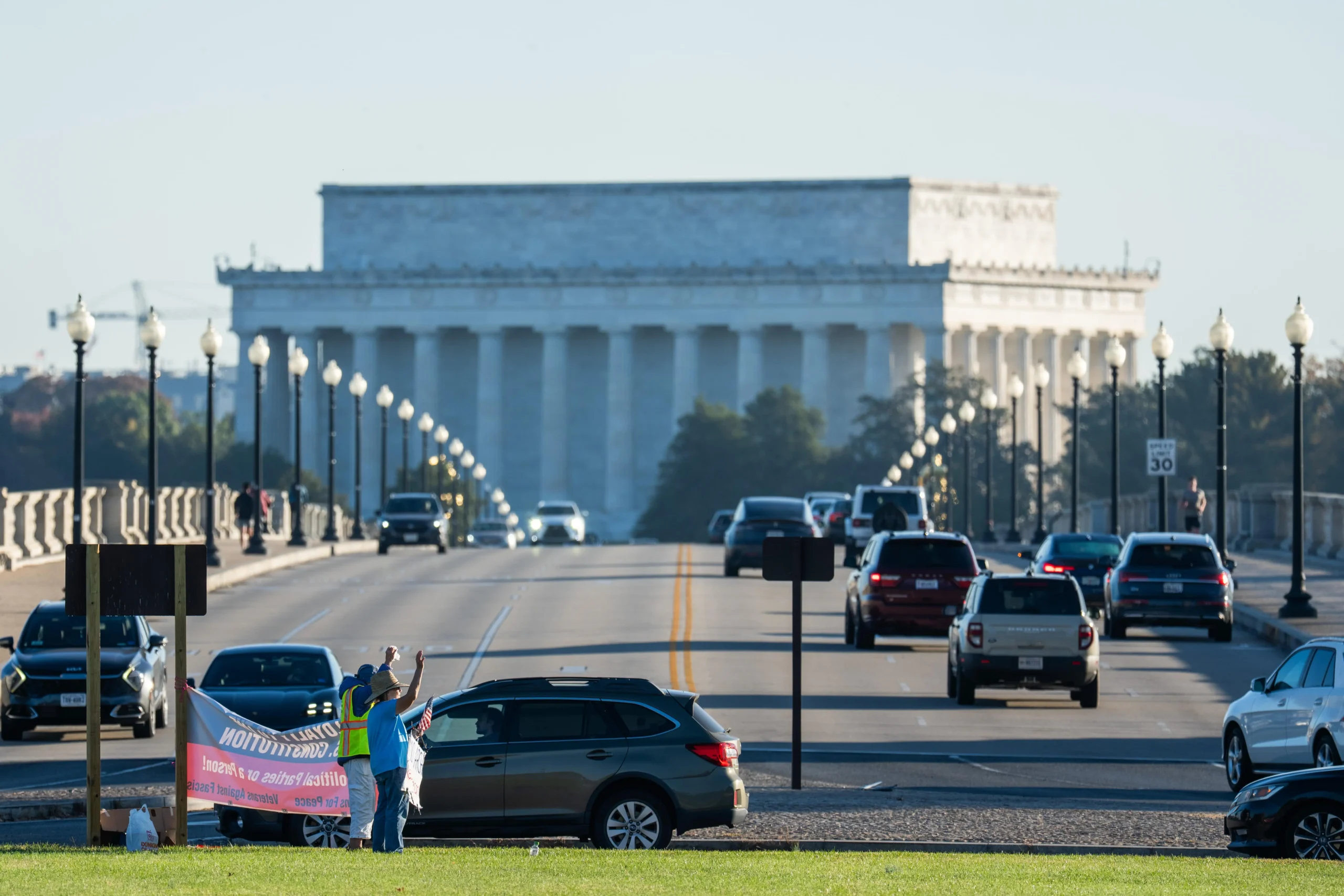
Trump has been rushing the various projects, a point Virginia Democratic Rep. Don Beyer made Thursday at a public hearing when he opposed construction of the memorial arch the president has planned in Memorial Circle directly across the Memorial Bridge from the Lincoln Memorial.
“The appropriations process beginning Jan. 3 will be controlled by Democrats. That will be one of the ways Congressman Beyer will step in,” said Beyer’s spokesman Aaron Fritschner.
A less appreciated impact will be the change in who names the general counsel of the House. The House Speaker has that role, presumably Rep. Hakeem Jeffries.
While Democrats have joined in lawsuits opposing the various projects, their filings don’t carry the weight of Congress as the minority. “You’ll see the new majority pulling back the balance of power that (House Speaker) Mike Johnson was willing to cede,” Fritschner said.
A planning commission hearing for the arch featured dozens of witnesses
Beyer has already been a critic, Fritschner said, and cited other members who have signed on in amicus briefs. More than 120 witnesses were on hand for the National Capital Planning Commission meeting, which ran for 9 ½ hours late into Thursday night.
The commission gave the 250-foot (76-meter) arch its final approval on an 8-4 vote, before a federal judge stepped in before midnight to block the Trump administration from breaking ground for 14 days.