


By
With four minutes and 35 seconds left in the third quarter of the Los Angeles Lakers’ 110-97 victory over the New York Knicks on Sunday, Luka Dončić — upset over what he considered a missed call — made a gesture with his hands that indicated the referees were receiving money for slanted officiating.
The NBA didn’t take too kindly to the implication, announcing Tuesday that Dončić would be fined $50,000 for the “unprofessional gesture.”
Where will that $50,000 go? Thanks in large part to the National Basketball Players’ Association, Dončić’s check will ultimately be put to good use thanks to the “Fined and Philanthropic” program, a union initiative that turns players’ fines into matching grants for charitable causes.
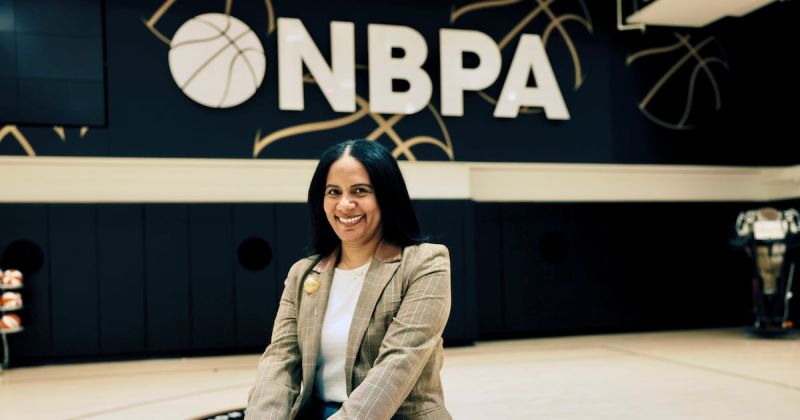
While the matching grants have been in place since 2015, it has kicked into high gear over the last two years because of the arrival of Erika Swilley, executive director of the union’s foundation, who coined the “Fined and Philanthropic” campaign to promote use of the funds. After nearly two decades working with NBA teams, Swilley has taken it upon herself to help players use the union’s matching grant program.
“One thing that I’m trying to do in my role is change how players think about philanthropy and their strategy,” Swilley told NBC News. “I want them to realize that they have a unique platform to really give back and help others and that there’s ways for them to go deeper than your traditional turkey giveaways or backpack giveaways, which are all great. But how do you take that same money and feed a family for a year? Take that same money and impact a classroom for a school year?”
When an NBA player is fined, for anything from a technical foul to, in Dončić’s case, an inappropriate gesture, the money is split between the league and the union. Because players typically contest fines, the total amount of fine money usually isn’t known until the end of the season.
But whatever the final amount is, the NBPA allows players to tap into the fund. Active players can get as much as $25,000 in matching grants for causes of their choice. Some retired players can get up to $15,000.
And with Swilley’s involvement, those causes have become more specific.
In December, for example, four Washington Wizards players partnered with the Greater Washington Urban League to provide 12 families with $75,000 in rent-debt relief, with money from the matching program going not only toward the families’ rent but also into investment accounts the families could unlock after they completed a financial literacy course.
“I think players appreciate knowing that their fine money is being used for good, and not only for good, but really on their behalf,” Swilley said. “And I had one player tell me it stings a little bit less when they get that fine.”
One of the players who has taken advantage of the program is Chicago Bulls guard Collin Sexton. Sexton, a Georgia native, is involved with multiple charitable organizations based in the Atlanta area: The nsoro Foundation, which aids youths aging out of foster homes, and the Mighty Millie Foundation, which provides resources in the fight against childhood cancer.
Sexton has used matching grants to donate to both foundations after he learned about the program from players association meetings. He told NBC News that players were pleased to learn how exactly their fines were being applied.
Sexton admits the charitable component also makes the paycheck deduction slightly more palatable.
“Especially, like, technical fouls with the referees or little scuffles here and there,” Sexton said. “It’s like, ‘You know what? It’s going it’s going to a good cause, and it’s going to go somewhere that can definitely use it.’”
For a player like Sexton, who came into the league with a goal of giving back, the union’s philanthropic effort has been particularly meaningful.
“One thing growing up, if I ever made it, I was like, ‘I’m gonna give back to my community,’” Sexton said. “I feel like sometimes we think about ‘I want to receive this, I want to receive that,’ but you get so much joy out of giving. And once the NBPA was letting me know about the matching, I was like, ‘I already want to do this for my community. I already want to give back.’ And it was a no-brainer.”
He added: “Leadership in the community isn’t about being above anyone. It’s more about the feeling of being less alone because you’re a part of something bigger than yourself. It creates gratitude when you know you’re helping others.”
So the next time you see Sexton, Dončić or any other NBA player use profanity to a referee or a little extra oomph during a heated scuffle, you may just be witnessing the start of a good deed.