
By Stephen Groves
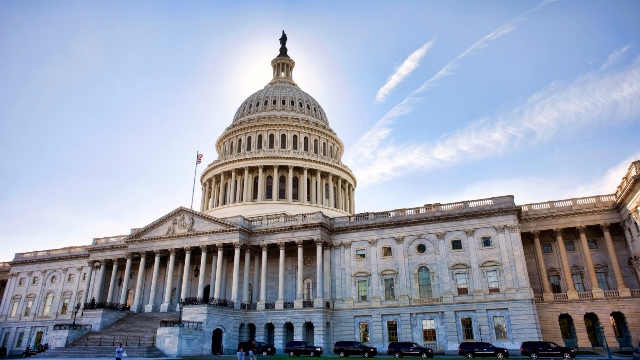
The United States’ war with Iran is entering its third week, but Congress has yet to publicly test the Trump administration’s case for the conflict.
Republicans in Congress have so far side-stepped public debate over the war, even as Senate Democrats reach for every tool at their disposal to demand hearings with Trump administration officials. Increasingly frustrated, Democrats are threatening this week to force a series of votes on the war, hoping that the effort to gum up the Senate’s voting schedule will prod Republicans to action.
“We’ve had no oversight whatsoever over what the executive is doing as we’re spending a billion dollars a day, and we have failed to have any real substantive debate or discussion,” said Sen. Cory Booker, D-N.J.
The role of Congress in the deliberations is an unsettled question with enormous stakes, given that lawmakers have the power to shape the trajectory of the conflict as it grows in cost and casualties. So far, 13 military members have been killed and billions of dollars have been spent, but President Donald Trump has not sought congressional approval for attacking Iran.
As the 17th day of the conflict dawned Monday, Republican lawmakers remained mostly resistant to the idea of quickly forcing public testimony before Congress.
How GOP leaders are handling calls for hearings
Senate Majority Leader John Thune told reporters last week that he didn’t expect public hearings specifically on the Iran war, but noted it would inevitably come up in the regular rhythm of testimony on military policy and spending.
“They have briefed us,” Thune, R-S.D., said, pointing to classified briefings from the Trump administration. Those sessions have been held behind closed doors and most lawmakers refuse to disclose more than the broad topics of discussion.
Thune also noted there have been regular news conferences from Defense Secretary Pete Hegseth and Gen. Dan Caine, chairman of the Joint Chiefs of Staff. They are “answering the hard questions that are being asked,” Thune said.
The GOP chairs of committees dealing with national security have also said they don’t have plans in the near term to hold hearings specifically on the war, though some acknowledged the value of lawmaker questioning.
Sen. Roger Wicker, the chair of the Senate Armed Services Committee, argued that the regular run of hearings on Capitol Hill would provide lawmakers with plentiful opportunities to ask questions.
“We’re going to conduct generous oversight, thorough oversight,” said Wicker, R-Miss.
Some Republicans are looking ahead to an expected supplemental budget request from the Trump administration to cover the costs of the war. That request, however, is likely weeks away and faces a difficult path through Congress.
Democrats have pointed out that the Pentagon has already received additional funding from Republicans’ marquee tax cut law that was passed last year and provided funding for GOP priorities, including at the Pentagon.
Wariness growing from some Republicans
Still, agitation from a few Republicans at the lack of high-level responses from the Trump administration is starting to show, especially as they brace for a hefty war bill from the administration.
“I don’t want to just be given the invoice from the Department of Defense, saying this is what it’s going to cost,” said Sen. Lisa Murkowski, R-Alaska. “I want them to be engaged with us.”
She added that it was important for lawmakers to get information both in classified briefings and public hearings “so that the public can better understand this, too.”
Another GOP senator on the powerful Appropriations Committee, Louisiana’s John Kennedy, exited a classified briefing last week fuming that it had been a “total waste of time” because the officials were not able to provide the answers that top-level Cabinet officials could.
Republicans have almost uniformly backed Trump’s decision to launch an attack on Iran, though many are wary of a lengthy conflict. Trump has cycled through different objectives for the war, ranging from crippling Iran’s military capabilities to a demand for “unconditional surrender.”
“I think we have to let the objective play out as far as we can, and if then the effort gets murky on how to get to the objective, that might be a good time to have some hearings, but it’s too early,” said Sen. Cynthis Lummis, a Wyoming Republican.
But as the midterm elections approach, Republicans are also aware that public support for the war remains tepid.
“I wish we could disclose a lot of this publicly because it would make it a whole lot easier to explain to the American people,” said Sen. Mike Rounds, R-S.D., adding that classified briefings were necessary to protect U.S. service members now that the war is under way.
How Democrats may force a debate
Democrats, meanwhile, are threatening to do just about everything in their power to bring attention to the war, even if it means repeatedly forcing votes that fail.
A group of six Democrats has said that unless hearings are scheduled with Hegseth, Secretary of State Marco Rubio and other Cabinet officials, they will call up daily votes on a series of war powers resolutions that if passed would require Trump to gain congressional approval before carrying out any more attacks on Iran. Similar resolutions have already been rejected by both chambers in the Republican-controlled Congress.
The votes, however, would eat up valuable time on the Senate floor and set the ground for a debate on the conflict just as Senate Republicans plan to spend much of the week trying to pass Trump’s priority legislation to impose strict new proof-of-citizenship requirements for voting.
The group of Democratic senators also hinted at using other tactics to slow the Senate’s work on other business.
Sen. Chris Murphy, a Connecticut Democrat, told reporters that unless there is a commitment for public hearings, “We’re not going to let the Senate go on with business as usual. We’re not going to let the Senate be silenced.”