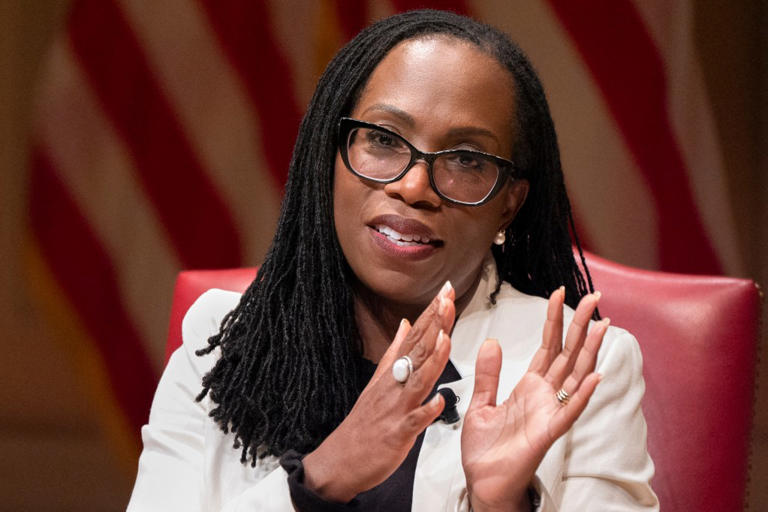



The justices ruled 9-0 in Hikma Pharmaceuticals USA Inc. v. Amarin Pharma, Inc., reversing a lower court decision and sending the case back for further proceedings, marking a rare moment of full agreement on a court often portrayed as ideologically divided. Jackson, a Biden appointee, has been one of the court’s most frequent dissenters, making her authorship of a unanimous opinion all the more notable.
The decision clarified the legal standard for when claims that generic drugmakers encouraged patent infringement can proceed when they market medicines with so-called “skinny labels,” which exclude patented uses—a shift that may affect how lower-cost drugs are brought to market.
That ruling extends beyond the courtroom: The case could affect how quickly cheaper generic drugs enter the market and how companies describe their products’ risks. Legal standards like the one clarified in the ruling can shape both drug prices and the volume of lawsuits tied to widely used medications. Generic drugs account for the vast majority of prescriptions in the United States, and drugmakers warned that a decision favoring Amarin could have discouraged cheaper alternatives, potentially driving up prices.
Why It Matters
The decision highlights a reality frequently overlooked in public discourse: The Supreme Court still decides a significant share of its cases unanimously. While high-profile rulings often break 6–3 along ideological lines, data shows that unanimous decisions remain a substantial portion of the Court’s output in recent terms.
It also underscores Jackson’s evolving role on the court. She was in the majority, according to Supreme Court term statistics, in about 72 percent of cases during the court’s 2024–25 term—the lowest of any justice.
What to Know
- The case: The dispute centered on whether a generic drugmaker can still face liability for inducing patent infringement after using a “skinny label” that omits patented uses of a branded drug.
- Background: Amarin, the maker of the drug Vascepa, sued Hikma, which sought to market a generic version while carving out a patented cardiovascular use from its label.
- Lower courts: A federal district court dismissed the case, but the U.S. Court of Appeals for the Federal Circuit allowed it to proceed, finding the allegations plausible.
- The ruling: The Supreme Court reversed that decision 9–0 in an opinion written by Jackson, clarifying the legal standard governing when such claims can proceed.
- Broader context: The case is part of an ongoing effort by the court to clarify how patent law applies to generic drugs under the Hatch-Waxman Act, which governs competition between brand-name and generic pharmaceuticals.
The ruling is not Jackson’s first unanimous opinion this term. She also authored a 9-0 decision earlier this year in Urias‑Orellana v. Bondi, an immigration case requiring federal appeals courts to defer to immigration judges’ findings when reviewing asylum claims, reinforcing a highly deferential standard in deportation cases. In that case, involving a Salvadoran family seeking protection in the United States, Jackson wrote that courts must uphold agency determinations unless the evidence clearly compels a different conclusion, a decision seen as strengthening executive authority in immigration enforcement.
The unanimous ruling also contrasts with cases in which Jackson has sharply broken from her colleagues. In Fernandez v. United States, decided last week, she issued a lone dissent in an 8-1 ruling, separating not only from the court’s conservative majority but also from fellow liberal justices Elena Kagan and Sonia Sotomayor. The case centered on whether prisoners can use compassionate release to challenge their convictions, and Jackson argued the majority took too narrow a view of that pathway for relief.
What Happens Next
The case now returns to the lower courts, where judges will apply the Supreme Court’s clarified legal framework to determine whether Amarin’s claims can proceed under the proper standard.