
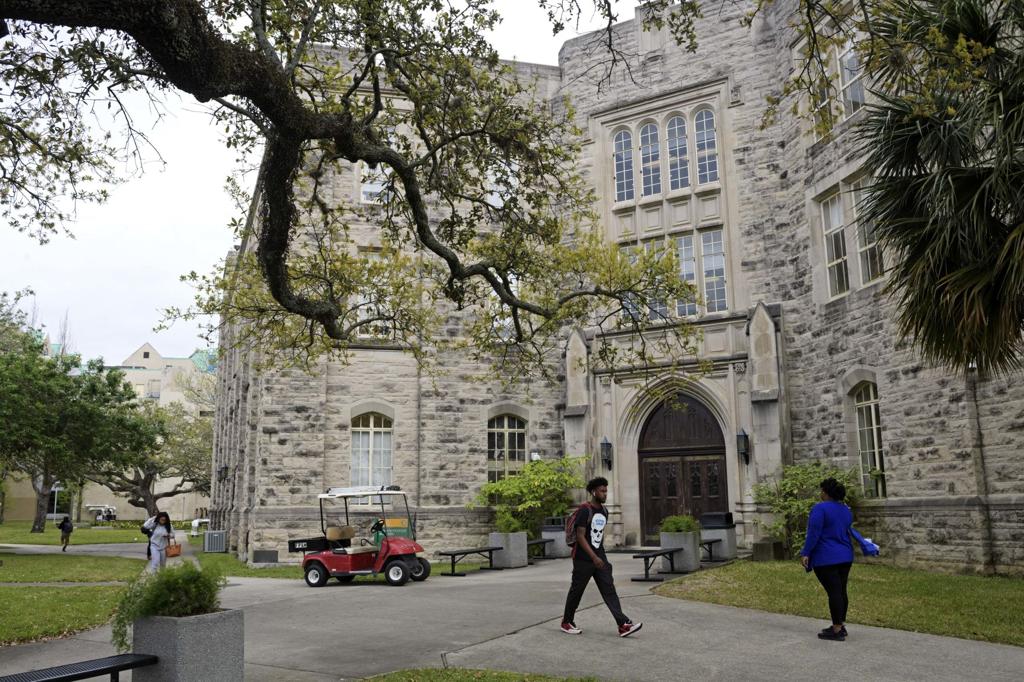
Courtesy of Xavier University
This summer, America turns 250 years old. Across the country, communities are marking the occasion with celebrations and ceremonies. Flags will fly, speeches will be given and the nation will pause to marvel at two and a half centuries of the American experiment.
Two hundred and fifty years of democracy is, by any measure, an extraordinary achievement. A nation that began as a bold experiment in self-governance has grown into the world’s longest-standing constitutional republic, proving to be a beacon of progress and inspiring movements for freedom and liberty across the globe.
While this milestone is cause for celebration, it is also a moment for honest reckoning — asking ourselves which chapters of our story we have told in full, and which we have too long consigned to the margins.
America’s founding promise — that all men are created equal — was a declaration the nation had not yet earned, “the promissory note” referred to by Dr. Martin Luther King. The work of earning it has been the great, unfinished labor of every generation since. The emancipation of enslaved people and the century-long struggle of their descendants to claim full citizenship rights represent perhaps the most profound achievement in that ongoing project of liberty. And historically Black colleges and universities (HBCUs) were built precisely at the hinge of that achievement, making it possible for Black Americans to pursue lives of dignity, purpose and full citizenship.
Dr. Reynold Verret, president of Xavier University.
Irving Johnson III
The story of HBCUs is one such chapter. And it belongs not at the footnotes of American history, but at its very center.
Born in the aftermath of the Civil War, HBCUs were created out of necessity. A shattered nation, reconstructing itself, refused to open the doors of higher education to Black Americans. And with the assistance of generous and committed friends, Black Americans built their own. Against immense opposition, HBCUs emerged first as institutions of learning that soon became engines of Black self-determination and, in turn, pillars of American democracy itself.
Consider what that moment demanded: not only the courage to imagine freedom, but the discipline to build the institutions that freedom requires. Schools. Libraries. Laboratories. Lecture halls. HBCUs provided the educational infrastructure and thought leaders for a people emerging from bondage.
The principles of justice, service and democratic citizenship that were cultivated on HBCU campuses did not remain confined to classrooms and yards. They took root in students and alumni who carried those values into the wider world.
From the suffrage movement to the Civil Rights Era, HBCU students and alumni have been at the forefront of every major campaign to redraw the moral and legal architecture of American democracy. They organized sit-ins and freedom rides. They registered voters in counties where doing so required extraordinary courage. They argued cases before the Supreme Court, wrote the legislation, preached the sermons and paid the prices that made the Civil Rights Act and the Voting Rights Act not just possible, but inevitable. When we speak of the legal victories that transformed this republic, we are speaking, in no small part, of men and women shaped on HBCU campuses.
This legacy did not end with the passage of landmark legislation. It endures.
Today, HBCUs continue to produce a disproportionate share of Black professionals in law, engineering, medicine, education, the sciences and public service. Across every industry and in every region of the country, the fingerprints of an HBCU education are visible proof of what an equitable higher education system can produce — and what this nation is capable of when it invests in all of its people.
There is a temptation in moments of national celebration to flatten complexity and tell the story of America as a straight and unbroken line from promise to fulfillment. But the truer and, I would argue, the more patriotic story is the one that acknowledges how much each generation has had to fight for the ideals the founders declared. It is the story of a republic perpetually reforming itself, perpetually reaching toward and securing a more perfect union.
HBCUs are a part of the American story in its deepest sense. They did not merely respond to injustice. They modeled the possibility of a better day. They said, in brick and mortar and curriculum and community, that Black intellectual life was not a concession to be granted but a truth to be celebrated, a gift to the nation — and that the American project of liberty could not be complete without fulfilling its promise to all.
As the nation raises a toast to 250 years, we would do well to remember: Our democracy endures because every generation has had the courage to demand that its promise extend further — to insist that liberty is not a gift bestowed on some, but a right belonging to all. HBCUs have carried that promise for generations.
This is not a footnote. That is the story of American progress.