
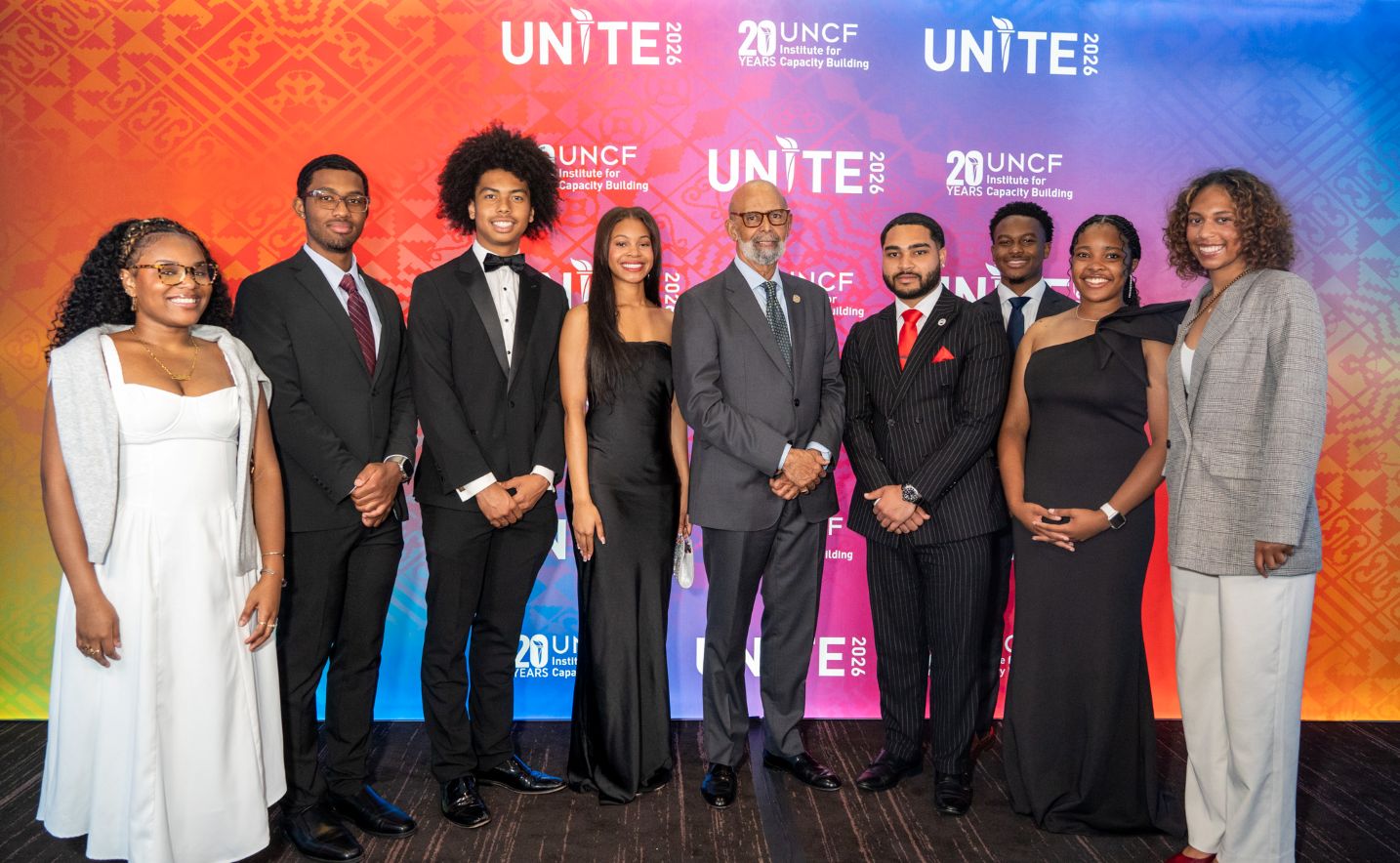
Today’s college prospects are weighing each HBCU’s cost against the resources, career opportunities and long-term outcomes it can deliver. Students who aren’t convinced by the return on investment won’t bite solely on tradition.
“Our tuition dollars can go to any of the thousand-plus institutions in America or abroad,” Nicholas Hawkins, a junior at Texas Southern University, told this week’s United Negro College Fund’s UNITE conference. “Without us, there would be no institution.”
Colleges must evolve to improve the student experience, said conference attendees who remained enthusiastic about HBCUs’ unique power to promote belonging and opportunity.
“We’re noticing that we’re serving a different demographic of students with different skillsets and needs,” Anthony David, president of Livingstone College in North Carolina, said during a leadership panel.
Modernizing infrastructure is key to attracting new students, says April Clark, vice president of institutional advancement at Philander Smith University in Arkansas.
Aging (and, in some cases, decrepit) classrooms and living spaces deter many from enrolling at even the most hallowed historically Black colleges. “Vibes and history are not going to cut it anymore,” Clark says. “Students want their own dorm and their own bathroom.”
Capital spending has slumped across higher education, with dollars spent on construction, renovation and deferred maintenance reaching a near decade low.
The IGNITE HBCU Excellence Act could provide federal grants for many institutions to start building without debt. Conference attendees were asked to call their local representatives and urge them to pass the legislation.
Workforce readiness is another way to enhance an HBCU’s value, especially for Pell-eligible and first-generation learners, says Calvin Littlejohn, director of career services at Stillman College in Alabama.
Stillman embeds experiential learning into curricula and invites first-year students to begin career and professional development. “We used to think we only had to make sure juniors and seniors were career ready, but now I see this as a continuum,” Littlejohn says. “If you learn earlier, you’re much better prepared to get into the workforce.”
Career development opportunities are especially vital as some corporations roll back their commitment to diversity amid federal and state crackdowns on DEI, says Taliah Givens, senior director of student professional development programs at the United Negro College Fund.
“Employers want people who can not only count, read and write, but collaborate, think critically and communicate,” Givens says. “Data analysis is also a key skill required in professional development, no matter what industry.”
Colleges must prepare their students now for when corporate practices inevitably change, Given says.
“Diversity isn’t a title—it’s action,” she added. “Companies putting their money behind UNITE show that they still believe in our mission.”
HBCUs are deepening recruitment efforts beyond K12 upperclassmen. Tougaloo College in Mississippi offers on-campus dual enrollment to ninth graders, allowing some students to earn an associate degree before their high school diploma.
College leaders must strengthen their relationships with K12 counselors, who can enlighten young learners about HBCUs well before the college search begins, says Rakiba Mitchell, a counselor for Detroit Public Schools.
“Students don’t choose what they don’t know exists,” she says.