
By Dan Carney
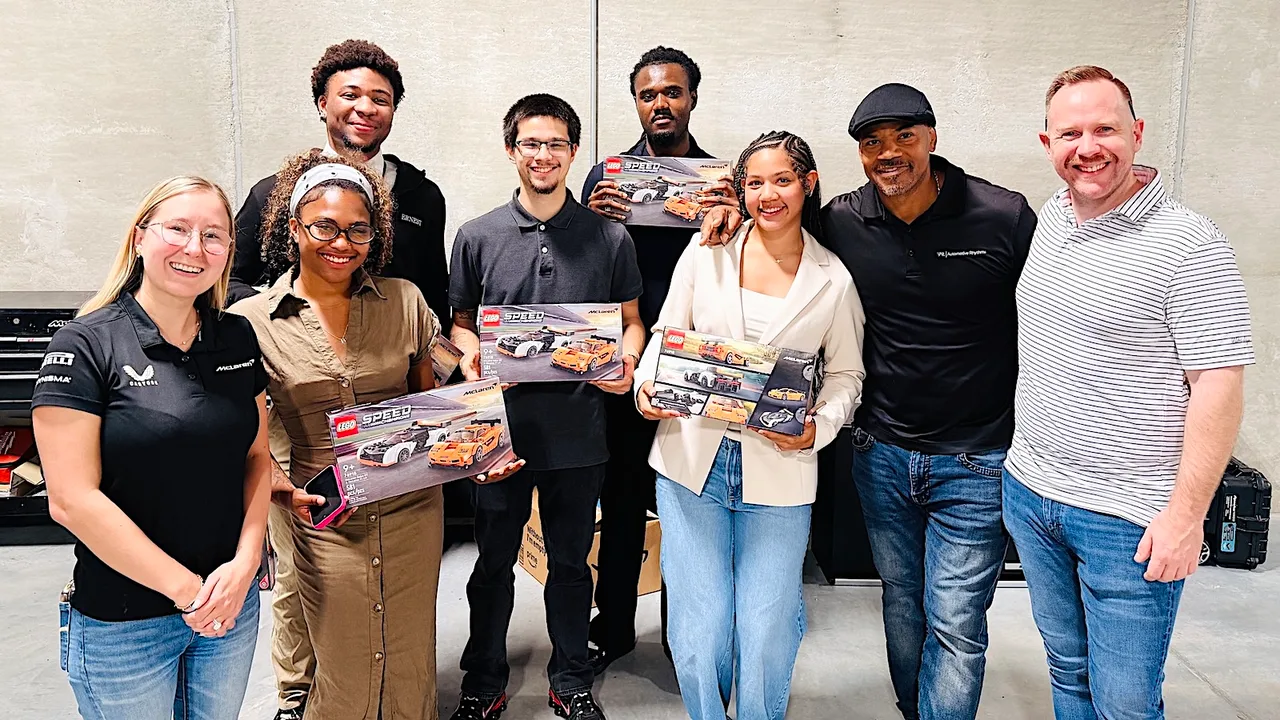
A handful of US college students got the benefit of a peek inside the operations of McLaren Automotive this summer, courtesy of a program called The Driving Force. Five students from Historically Black Colleges and Universities (HBCUs) participated in the program, with Howard University, Morgan State University, and Coppin State University represented.
“We are thrilled to partner with The Driving Force and share its commitment to supporting the next generation. We have a responsibility to inspire and develop future students and automotive enthusiasts, and we are proud to help create opportunities that will shape the future of our industry,” said Nicolas Brown, President, McLaren the Americas.
The Driving Force is the brainchild of veteran automotive journalist Kimatni Rawlins, who is looking to provide a hand up to the next generation. “Our alliance with McLaren Automotive is more than a corporate handshake; it’s a covenant,” said Rawlins. “By cultivating pathways for HBCU students and emerging talents from all communities, The Driving Force is engineering equity at the highest echelon.”
The students enjoyed a five-week program that involved weekly Zoom meetings with McLaren Automotive executives who provided information on what it is like working at the company. These included Nicolas Brown, president of McLaren Automotive in the Americas, and Sean MacKay, technical team supervisor. They provided the students with insight into the company’s operations that create desirable super sports cars for the global market.
“As a mechanical engineering student, I especially appreciated learning how engineering extends far beyond the design of a vehicle,” noted Ernest Lingani, a Howard University mechanical engineering student. “Through discussions on vehicle development, technical training, reliability, customer experience, aftersales support, and business strategy, I gained a deeper understanding of how every department contributes to delivering the McLaren experience.”
There was useful insight into the skills needed to be successful as an engineer. “I came to realize that engineering excellence must be supported by effective communication, collaboration, and a commitment to continuous improvement,” said Lingani.
That’s because, contrary to popular myth, great products aren’t created by superstar individuals, but by superstar teams. “One of the most valuable lessons I learned was that innovation is not the responsibility of one individual or one department,” he said. “Creating an exceptional product requires engineers, technicians, business leaders, marketers, and customer support teams working together toward a common goal. Seeing how these different disciplines connect gave me a much greater appreciation for the importance of teamwork and interdisciplinary collaboration.”
His Howard classmate, Justin J. Vincent, added, “Mr. Sean MacKay, the Technical Team Supervisor, provided incredible insight into the precise engineering and attention to detail that goes into every McLaren that reaches the road. We also had the privilege of speaking with Mr. Nicolas Brown, Director of McLaren Americas, who oversees the company’s operations throughout the Americas. He explained how McLaren vehicles are marketed, sold, and supported while maintaining the brand’s reputation for excellence.”
At the program’s conclusion, all of the students visited McLaren’s New Vehicle Processing Center in Baltimore. That’s where McLaren’s cars arrive in the US, and the company inspects them on arrival to ensure quality before delivery to the dealer network. This was an appreciated reward to the students when they finished the program, as they got a ride in a McLaren Artura and got to meet some of their advisors in person.