
By Kendra Bryant
The Maryland Commission on Civil Rights (MCCR) and the Maryland Commission on Civil Rights Foundation marked the 2026 Annual Civil Rights Gala on Sept. 26 at Maryland Live! Casino and Hotel with the theme of “Healing Our Communities, Honoring Our Humanity.”
This year’s keynote speaker was award-winning journalist Roland Martin. His speech was inspired by a scene from the television series “Scandal” in which Olivia Pope, played by Kerry Washington, speaks with her father, Eli Pope, played by Joe Morton. In the scene, Eli tells his daughter, “You have no idea what is currently happening. You’re skipping around in a field full of bombs and mistaking them for daises.”
“I believe what often happens is that when we are in the middle of a war, a lot of us are moving and operating as if it’s a picnic,” said Martin. “When I think about what is happening today in this country, I really think that people are running around in fields of daisies, but bombs are going off all around us.”
Martin addressed comparisons between the struggles faced by previous generations and current political conditions.
“I often hear people say, ‘Well we got through slavery, so we can get through whatever Trump does.’ But you didn’t get through it,” said Martin. “I hear ‘we’re not our ancestors,’ and my response is often that they’re right. If we were truly our ancestors, there’s no way we would be as quiet or complacent as I believe many of us are today.”
Martin also discussed Project 2025 using a football analogy, comparing the plan to a team handing its opponent its offensive and defensive playbooks before a game.
He pointed to what he described as a recurring pattern involving movements within the Black community and opposition to those movements, referencing the Civil Rights Movement and Black Lives Matter movement.
“When I look at the history I look at land being stolen and all of these things that have happened,” said Martin. “I need people to understand that what we’re dealing with today is not the first time we’ve seen this. We’ve seen this before. If you want to understand the present, you better go read about the past, because history repeats itself. When you have any period of Black success, you’re going to have the white backlash as fierce as possible. There was an attack on Black Lives Matter, critical race theory, woke and DEI.”
Martin discussed the Civil Rights Act of 1964 and what he described as its broader impact on the rights of African Americans, women and people of color.
“They realized we had a new generation of young white Americans, Latin Americans, Asian Americans who were beginning to understand the reality of race in America and they were beginning to understand the reality of race in America and were aligning on those interests,” said Martin. “If we understand the historical nature of civil rights in this country, civil rights in America have always been received as a result of Black pain, death and blood.”
“If we understand the historical nature of civil rights in this country, civil rights in America have always been received as a result of Black pain, death and blood,” said Roland Martin.
Martin called on the audience to take action. He challenged community organizations, fraternities, sororities and political figures to become more involved in addressing issues facing communities across the country.
“We have too many people who are scared,” said Martin. “Scared of the challenge, the press, scared to use their voice. This is a time for people not to be scared. If there’s ever a time for people to truly be modern day Frederick Douglasses and Harriet Tubmans, it is now. You cannot be the generation where things stop on your watch. We have so many organizations, but the question is, ‘How can we have that many organizations, but they’re not fully committed to the cause of liberation?”
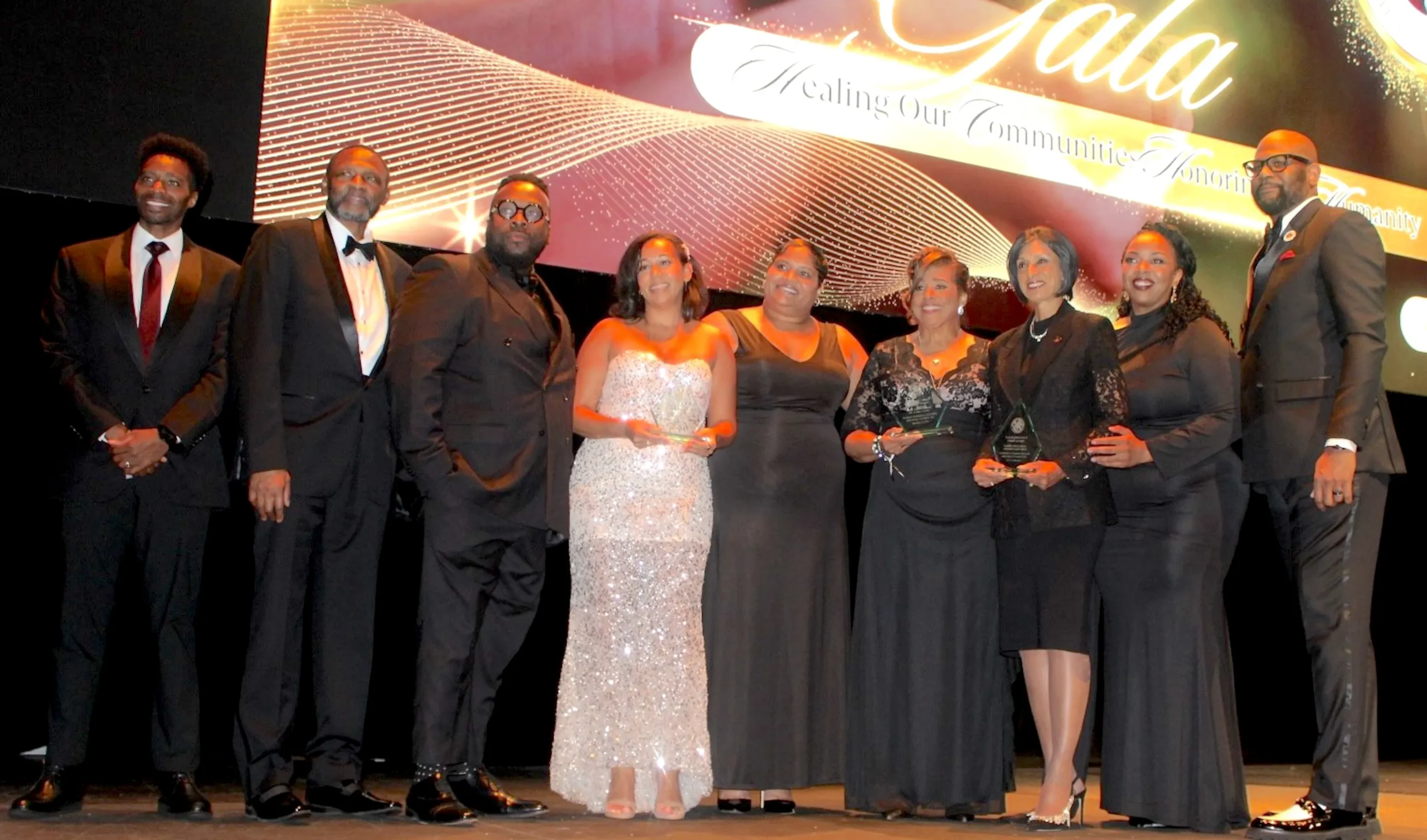
The gala also included an awards presentation recognizing community leaders and organizations for their contributions to communities across Maryland.
Dominique Sessa, a disability advocate, was honored with the Individual Community Impact Award. The Social Justice Alliance, a collaborative effort between Bowie State University and the University of Maryland, earned the Agency Community Impact Award. Willie Pearl Mackey King, civil rights activist, was presented the Glendora C. Hughes Award.
King worked closely with Dr. Martin Luther King Jr. and transcribed his notable “Letter from Birmingham Jail.” She recalled sitting on her knees and taping the letter together.
“Today, I speak to seminaries, schools and churches about the importance of creating community,” said King. “My work teaches that we must recognize the value and the worth of all people. Love, kindness, compassion and inclusion are powerful weapons against hatred and injustice.”
MCCR Executive Director Cleveland L. Horton II thanked his staff and commissioners for their dedication to their work.
“They have families, they experience loss and face disappointments, they have difficult days,” said Horton. “Yet they continue to show up. They show up because somewhere in Maryland, someone needs them to. At a time where we are witnessing attacks on civil rights, history, institutions and attempts to erase, minimize and roll back progress that generations before us sacrificed so much to achieve, these are the people who refuse to look the other way.”
Horton presented the MCCR Icon Award to Candice Crenshaw, MCCR director of education and outreach.