
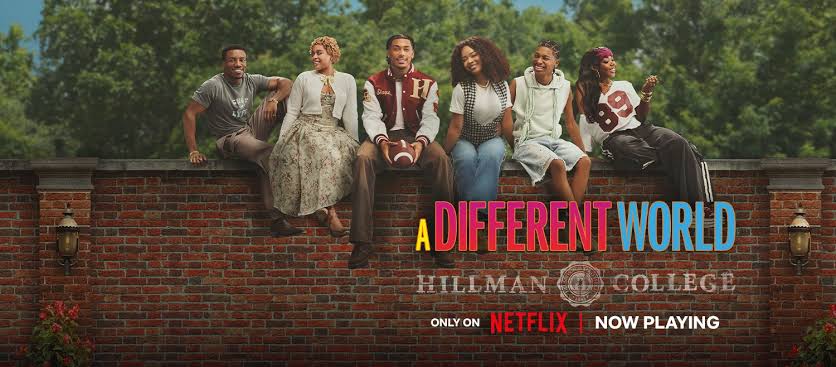
There are no spoilers in this article. A Different World was a popular, incredibly successful sitcom that aired on NBC between 1987 and 1993. Hillman College, the fictitious HBCU in the show, welcomed a new class of first-year students this fall. Fans of the original Cosby Showspinoff, as well as a new generation of viewers, are responding favorably to the reboot. For several days after its release, it claimed the most-watched spot on Netflix.
The series provides an important window into campus life at HBCUs. Like other shows with Black producers, writers, directors and actors, this one confirms that there is a big appetite for Black culture on Netflix and other streaming platforms. Social media buzz has also been inspiring. The announcement of the genius selection of a contemporary cultural icon to perform the theme song bolstered enthusiasm ahead of the Netflix release—as expected, Brandy delivers a savory vocal that matches the show’s cultural integrity.
The reboot does not pick up where its originator left off more than three decades ago. Like actual HBCUs, Hillman has evolved. The Netflix version exposes other dimensions of students’ experiences and institutional realities. Viewers ought not expect these 10 episodes to be the same as the 144 that aired across six seasons on NBC. The format and approach are very different. This may disappoint some watchers. It shouldn’t. I advise openness and appreciation for what the show captures about teaching, learning and relationships on today’s HBCU campuses.
Seven years ago, I wrote an Inside Higher Ed article about the 2018 Beyoncé Coachella performances that were subsequently released on Netflix. I mentioned A Different World therein and noted that the Beyoncé Netflix special also “showcases many distinctive cultural assets of Historically Black Colleges and Universities, including their marching bands and Greek-letter organizations.” Also, I insisted in another IHE article published earlier this year that Bad Bunny’s 2026 Super Bowl halftime performance was a brilliant “culture capture” of Puerto Rico.
Similarly, the Netflix version of A Different World is an important culture capture of a contemporary HBCU, not one from the late ’80s and early ’90s. This makes it harmonious with, not merely a replica of, its old self. A few cast members from the original show have recurring roles in the Netflix series. Several others make cameo appearances. They are all grown-up now. Most long-ago fans are likely to find satisfying this casting crossover and updates on those characters’ lives, careers and marriages. Seeing those actors, who are now around my age, was delightfully nostalgic.
HBCUs should leverage the popularity of this Netflix series. The original show inspired many young Black Americans to choose colleges like Hillman—I was one of them. A Different Worldmade me excited about attending an HBCU. Back then, Hillman seemed so fun, vibrant and culturally affirming. Aspects of this are maintained in the updated version, but comparatively, today’s Hillman feels less joyous. It made me laugh a lot less. The fun and funny features of HBCU culture are not as pronounced. Hopefully they will be in future seasons.
But HBCUs do not have to wait. They can amplify the beautiful moments in Hillman students’ interactions with peers, employees and alumni; the wonderful ways that faculty members demonstrate care inside and outside of classrooms; and the cultural relevance of the fictitious college’s curriculum. Many prospective Black collegians want this. Such experiences are available at real-life HBCUs. The show provides footage that HBCU recruiters and admissions officers can use as examples of what it could be like to be a student on their respective campuses.
We need additional seasons of A Different World and more shows like it. They can get young Black people and others excited about HBCUs, which could lead to quantifiable spikes in applications and student enrollments.
In my work with film and television companies here in Hollywood, Black creators and employees tell me that they too often encounter resistance to shows with strong Black themes and predominantly Black casts. “This is too narrow” is one problematic explanation that executives and other decision-makers offer. “There won’t be a large enough audience for a show like this” is another. Both the original and modernized versions of A Different World dispel such presumptions. Several other Black-focused shows, series and movies on Netflix and elsewhere have done so, too.
This series once again confirms the purchasing and ratings power of Black Americans: We can take shows to No. 1 and catapult cinematic excellence to massive cultural significance. A Different World is a classic cultural treasure. While the Netflix version takes a different approach to showcasing the culture of HBCUs, it preserves one financially profitable implication for Hollywood and every place else where TV is made: Black stories matter, Black culture matters and there are audiences that will stream and purchase culturally relevant content.